Fes
The spiritual and artisan capital, and a superb gateway to the Sahara via the Middle Atlas.
Fes medina, Sahara crossing and Marrakech — a complete imperial-and-desert week in five days.
Journey overview
A private Moroccan journey from Fes
Start with a guided day in Fes so the medina is not a blur on arrival night. Then the desert road, camp, gorges, and Marrakech. Five days is tight but coherent if we protect the Fes morning.
For travelers flying Fes in, Marrakech out.
Places on this tour: Fes · Merzouga · Todra Gorge · Ait Ben Haddou · Marrakech
This is a private tour with Moroccan Travel. See all tours from Fes, browse Morocco desert tours or every private Morocco tour.
Useful official background for places on this route: UNESCO listing for the Ksar of Ait-Ben-Haddou (UNESCO World Heritage Centre — Ksar of Ait-Ben-Haddou).
Your route
Fes
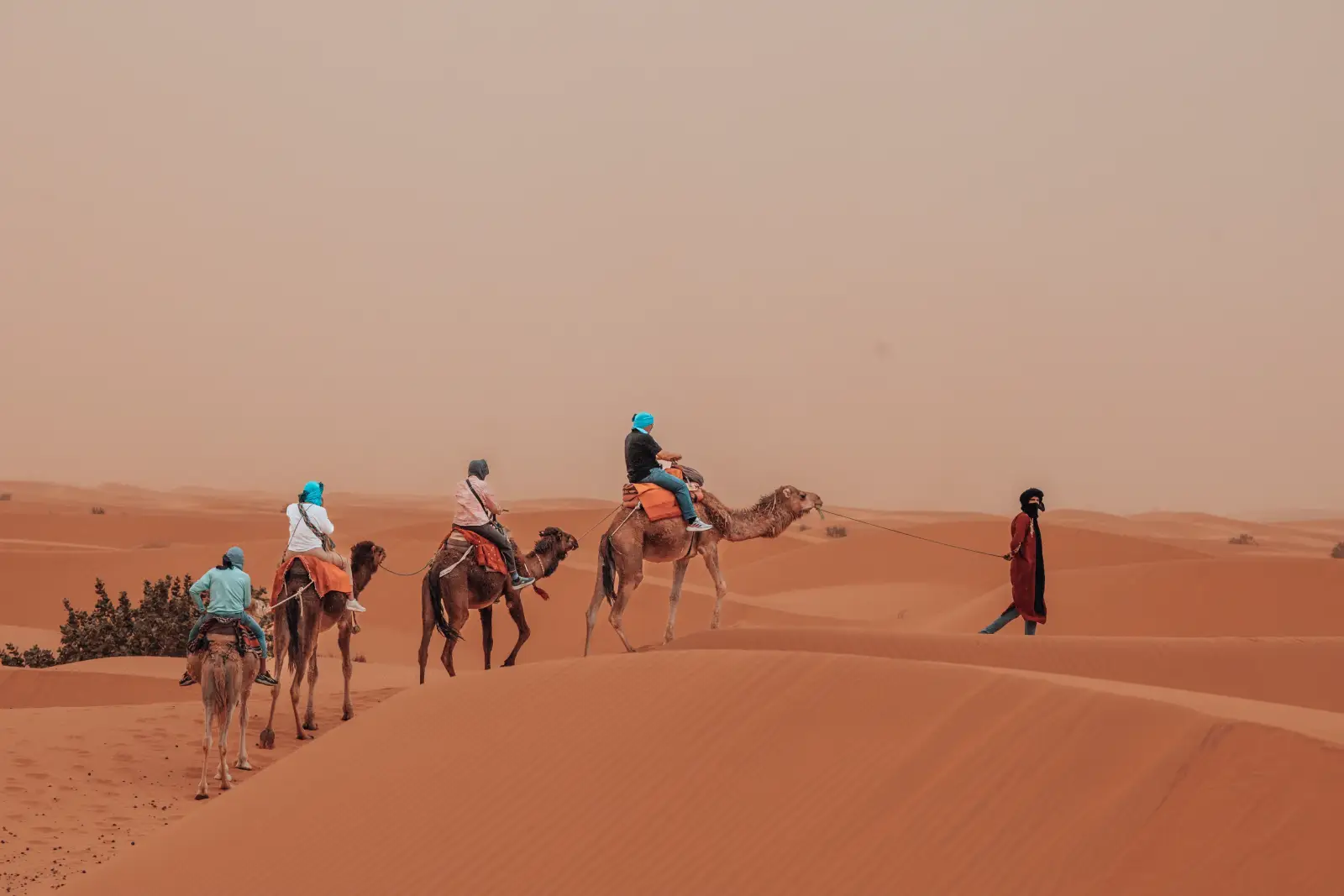 Merzouga
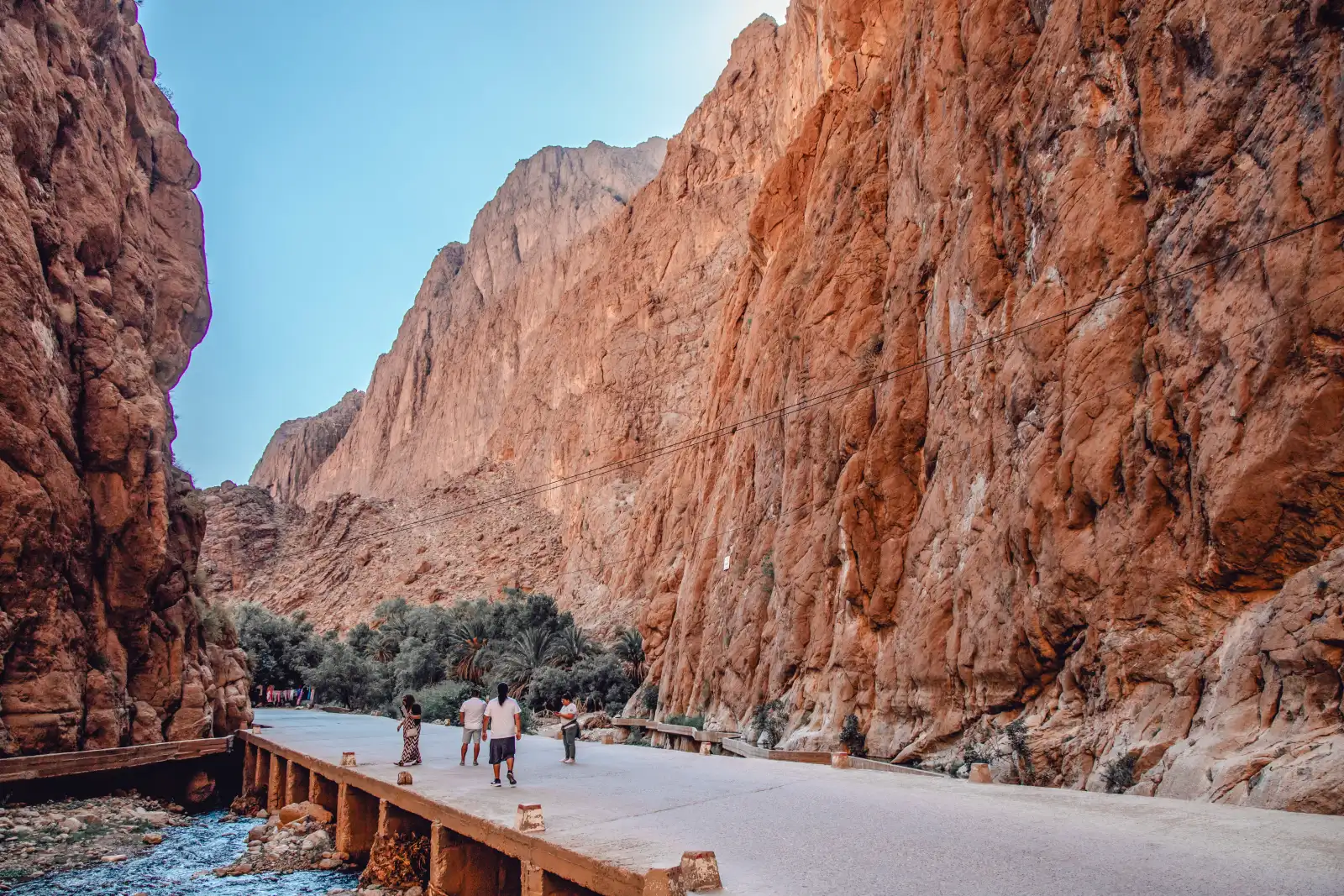 Todra Gorge
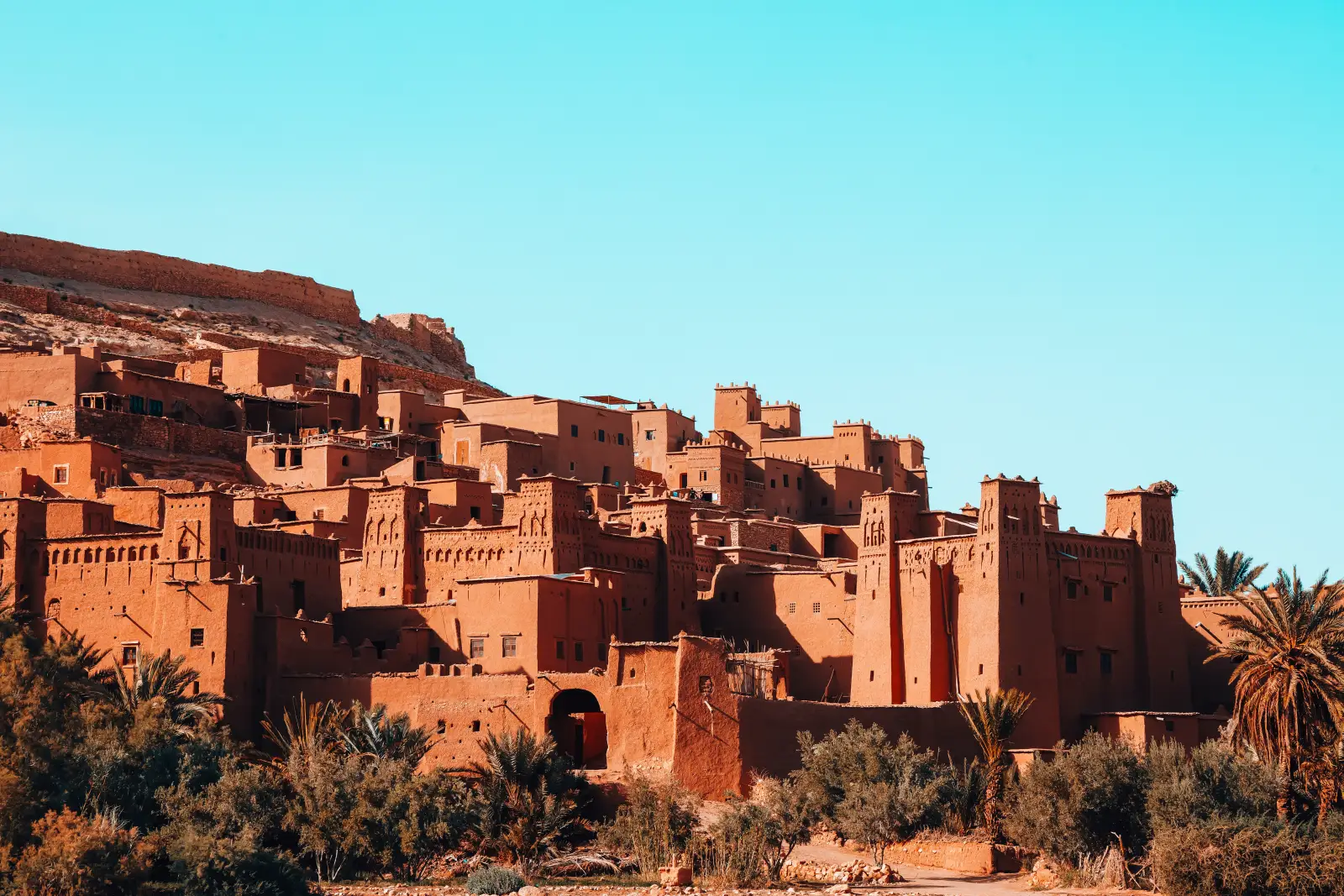 Ait Ben Haddou
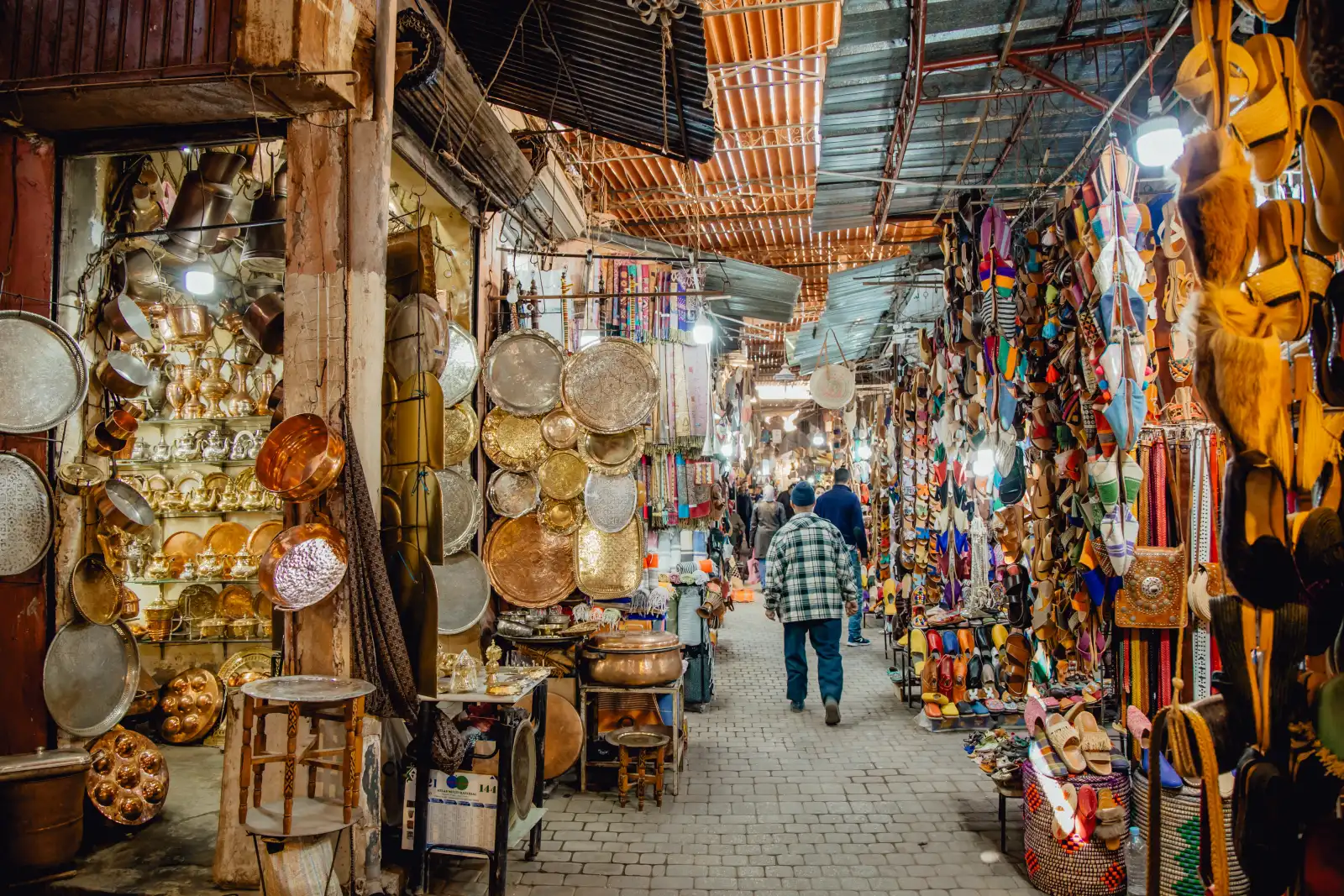 Marrakech
Tour highlights
The spiritual and artisan capital, and a superb gateway to the Sahara via the Middle Atlas.
The village at the foot of Erg Chebbi, Morocco’s most sculptural dunes.
A limestone canyon on the way to Merzouga, high walls and a cold stream.
UNESCO ksar, caravan architecture, and the postcard of southern Morocco.
Your 5-day itinerary
Fes el-Bali is the largest car-free medieval city in the Arab world, and it rewards a local guide. After breakfast you enter through one of the great gates and move from the Andalusian quarter toward the Qarawiyyin…
Fes el-Bali is the largest car-free medieval city in the Arab world, and it rewards a local guide. After breakfast you enter through one of the great gates and move from the Andalusian quarter toward the Qarawiyyin mosque-university, the henna souk, and the Nejjarine woodworkers’ foundouk.
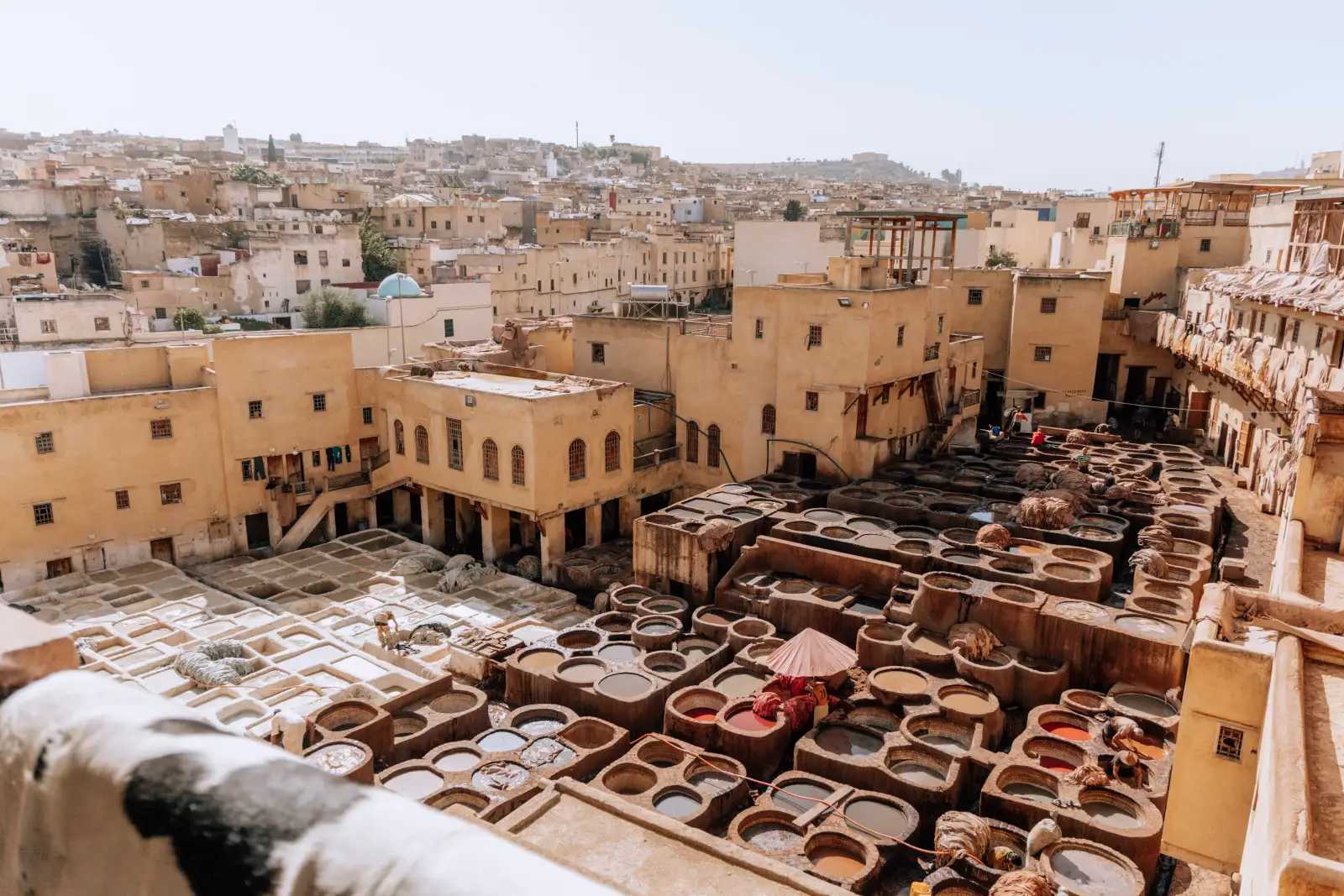
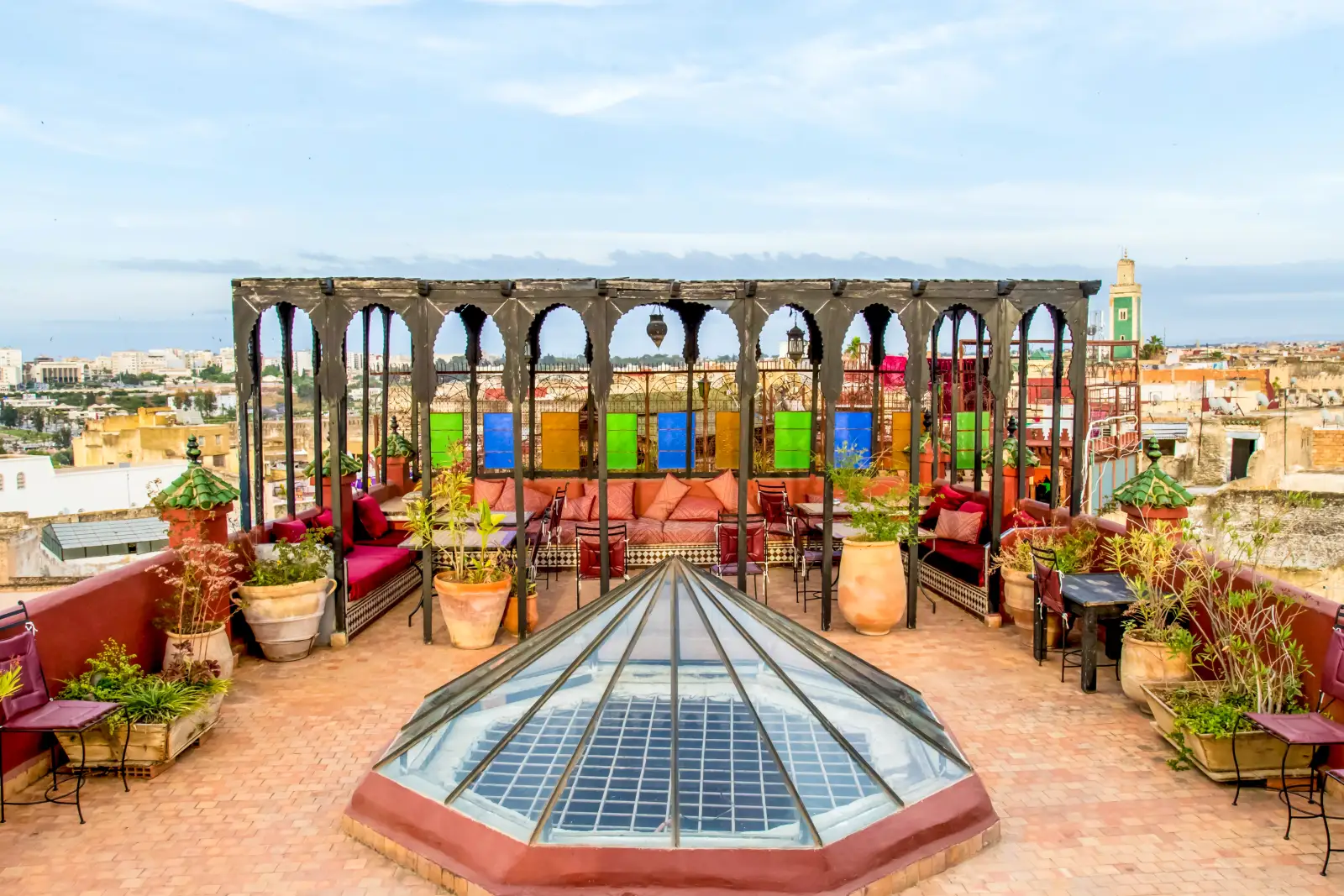
The Chouara tanneries are the most photographed scene in Fes: stone vats of white, brown and poppy-red dye, viewed from a terrace above. We time the visit so you are not rushed, and we skip aggressive shopping circuits unless you ask to see leather or carpet workshops. Lunch is in a restored palace or a simple medina restaurant, depending on your style.
Afternoon options include the Bou Inania madrasa, the pottery kilns of Fes Jdid, or simply getting lost — with your guide — in lanes that smell of cedar, cumin and wet wool. You return to the riad before dusk. Fes is intense; a private tour means you can step into a courtyard whenever the medina feels like too much.
Pickup at your Fes riad after breakfast. You leave the medina behind and climb into the Middle Atlas, a cooler world of cedar and oak. Ifrane, built like a small alpine town, is a coffee stop; Azrou’s forest often offers a…
Pickup at your Fes riad after breakfast. You leave the medina behind and climb into the Middle Atlas, a cooler world of cedar and oak. Ifrane, built like a small alpine town, is a coffee stop; Azrou’s forest often offers a glimpse of macaques. The air is noticeably fresher than the plains.
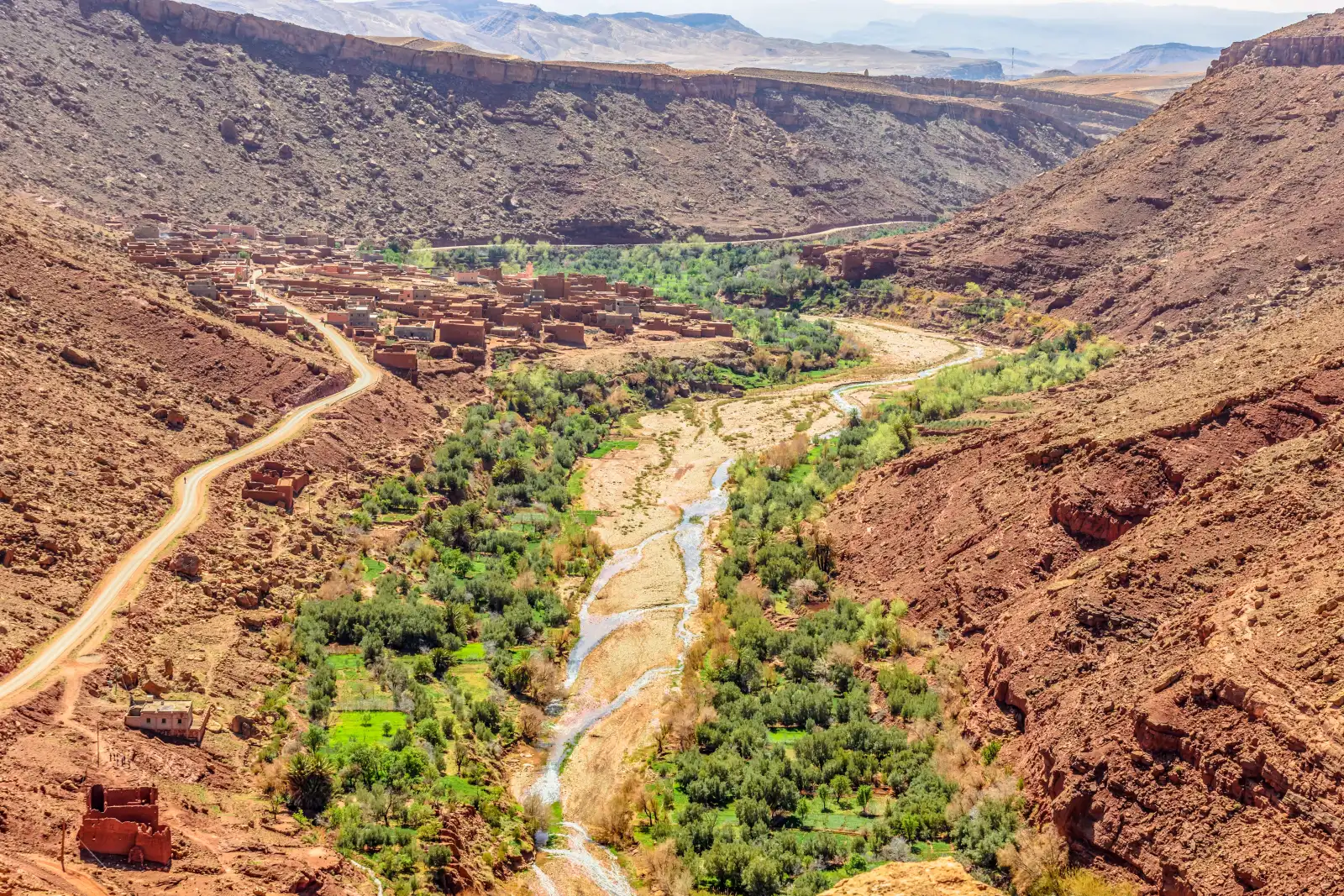
South of Midelt the landscape dries. Apple trees give way to steppe, then to the first views of the Ziz gorges — a break in the plateau where the river has cut a deep green trench of palms. We pause at a belvedere before continuing through Errachidia and Erfoud, towns that live off dates, fossils and the desert road.
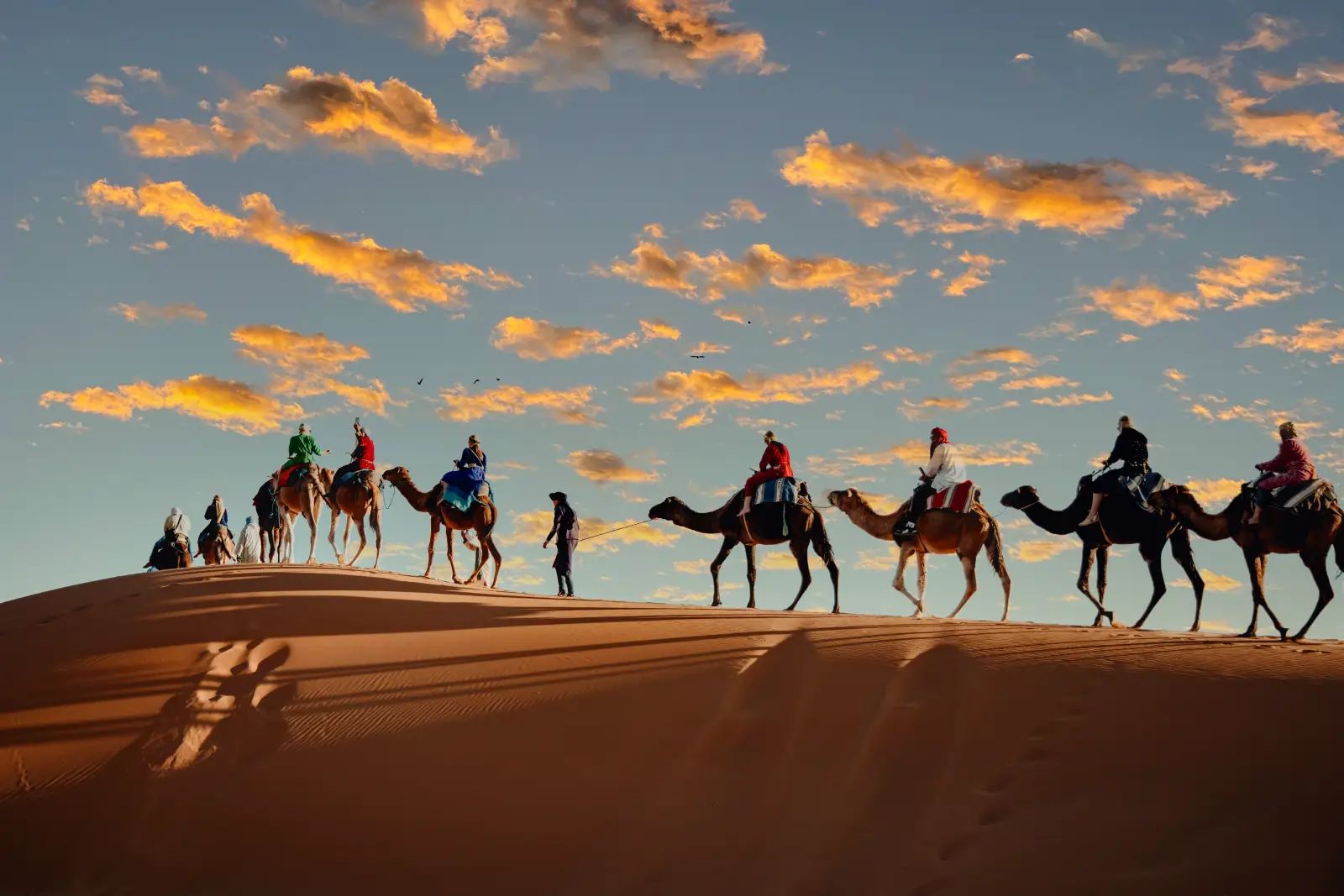
Erg Chebbi comes into view in the late afternoon. After a short rest in Merzouga, you mount camels and ride into the dunes for sunset. Dinner, Berber music and a night under an enormous sky follow at camp. If you would rather skip the camel, a 4x4 can take the same route into the sand.
Morning light in the Dades is worth an early walk. After breakfast you follow the valley to Tinghir and the Todra Gorge, where 300-meter limestone walls close in above a clear stream. There is time to stroll the canyon floor…
Morning light in the Dades is worth an early walk. After breakfast you follow the valley to Tinghir and the Todra Gorge, where 300-meter limestone walls close in above a clear stream. There is time to stroll the canyon floor, watch climbers on the faces, and have tea at a simple café at the narrowest point.
East of Tinghir the road crosses open hamada toward Tinejdad, Erfoud and Rissani, the old caravan market at the edge of the Tafilalet palmeraie. Rissani still feels like a frontier town: donkey carts, spice stalls and the last petrol station before the dunes. From here the Erg Chebbi sand sea rises suddenly — a 150-meter wall of orange ridges that looks almost unreal after hours of stone desert.
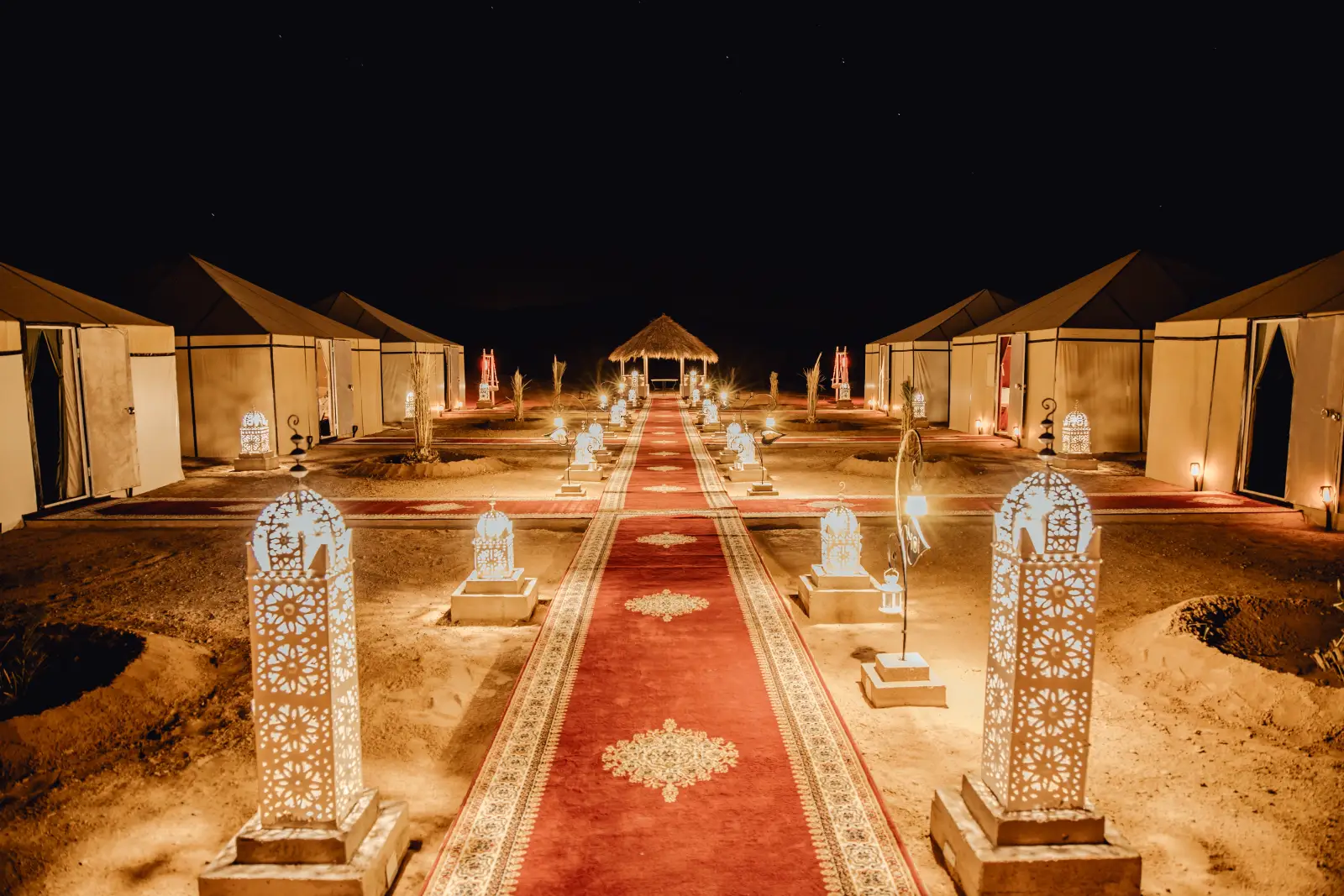
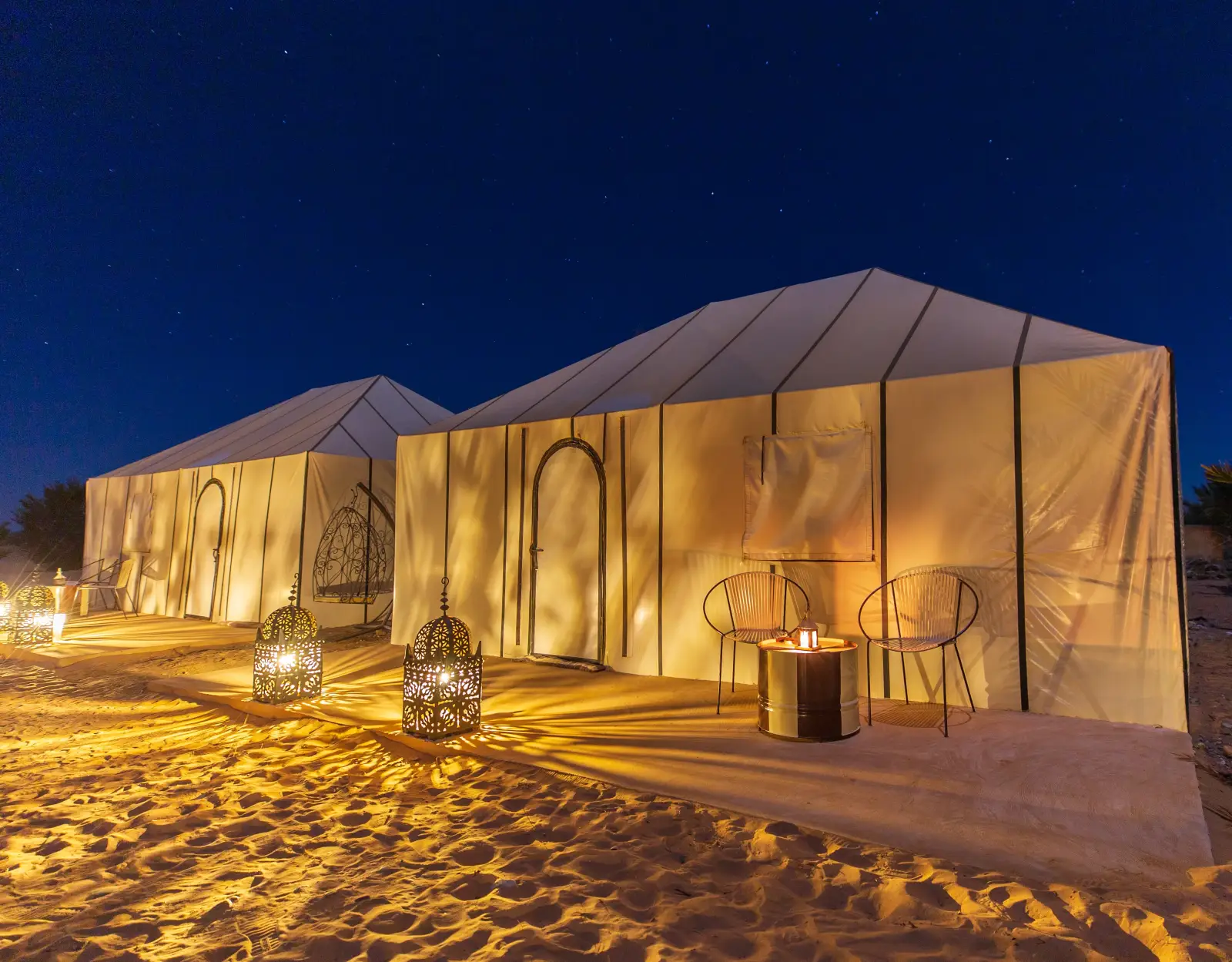
In Merzouga you leave the vehicle. Camels (or a 4x4 if you prefer) take you into the dunes for sunset. The camp is waiting with rugs, lanterns and a shared dinner of tagine and bread baked in sand. After music around the fire, the silence of the Sahara takes over. Sleep is in Berber tents; luxury camps add private bathrooms and proper beds if you have requested an upgrade.
After sunrise on the dunes you return by camel or 4x4 to Merzouga, collect the vehicle, and begin the westward road. Rissani’s market town is a last desert-edge stop for water and dates. The hamada looks emptier in morning light…
After sunrise on the dunes you return by camel or 4x4 to Merzouga, collect the vehicle, and begin the westward road. Rissani’s market town is a last desert-edge stop for water and dates. The hamada looks emptier in morning light than it did on the way in.
Todra Gorge is the walking pause of the day: limestone walls, a cold stream, tea if you want it. Then the Dades Valley opens — kasbahs, roses in season, and the road of a thousand photographs. Skoura’s palmeraie appears before Ouarzazate, a green surprise after so much stone.
You reach Ouarzazate in the late afternoon. Taourirt Kasbah is optional if energy remains; most guests prefer a shower and a quiet dinner. Tomorrow is Ait Ben Haddou and, on many itineraries, the Atlas toward Marrakech.
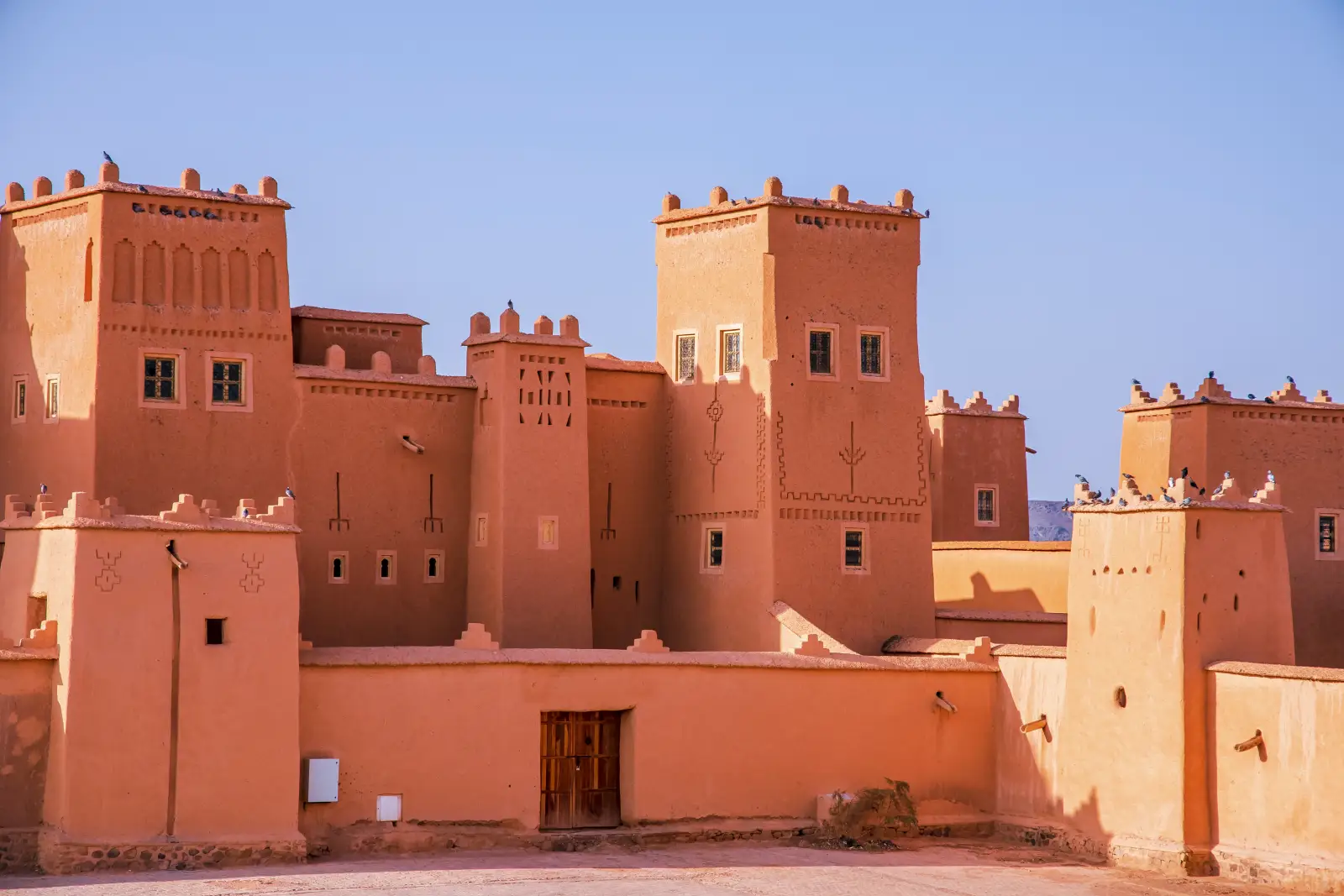
A morning visit to Ait Ben Haddou while many groups are still on the pass. You walk the ksar, climb toward the granary, and take the view over the Ounila Valley that has sold a thousand film stills — and still works in person.
Lunch is in the village or just below the pass. Then Tizi n’Tichka: switchbacks, walnut groves as you descend, and the first red walls of Marrakech in the late afternoon. We drop you at your riad and leave the evening free. Jemaa el-Fna is optional; a quiet courtyard is equally correct after the desert.
This is the classic final act of a southbound tour. If your flight is the same night, say so — we will time the pass and skip a long ksar walk.
A carefully selected mix of authentic stays — standard, comfort or luxury.
Some days involve longer drives due to the distances between regions — always broken with scenic stops.
The desert experience includes a camel trek, with a 4x4 option available if you prefer.
Everything can be adapted to your preferences. We work with family-run stays and local guides.
Yes. You travel in a private air-conditioned vehicle with a professional driver. Dates, pace and stops are yours — we do not combine you with other bookings.
Yes. Nights, hotel category, camel versus 4x4, extra cities and slower driving days can all be rewritten before you book. This outline is a starting point.
No. The usual sunset ride into Erg Chebbi lasts about 45–90 minutes at walking pace. You may take a 4x4 to camp instead — say so when you inquire.
Layers, closed shoes, a scarf for wind, sunscreen and a small torch. Camps provide blankets. Duffels move more kindly than hard suitcases. Nights can be cold even after hot afternoons.
Tell us your plans and we’ll create a personalised itinerary for you.
Fes → Todra Gorge → Marrakech
A one-way southbound journey with time for gorges, kasbahs and a proper Sahara night.
View TourFes → Merzouga → Marrakech
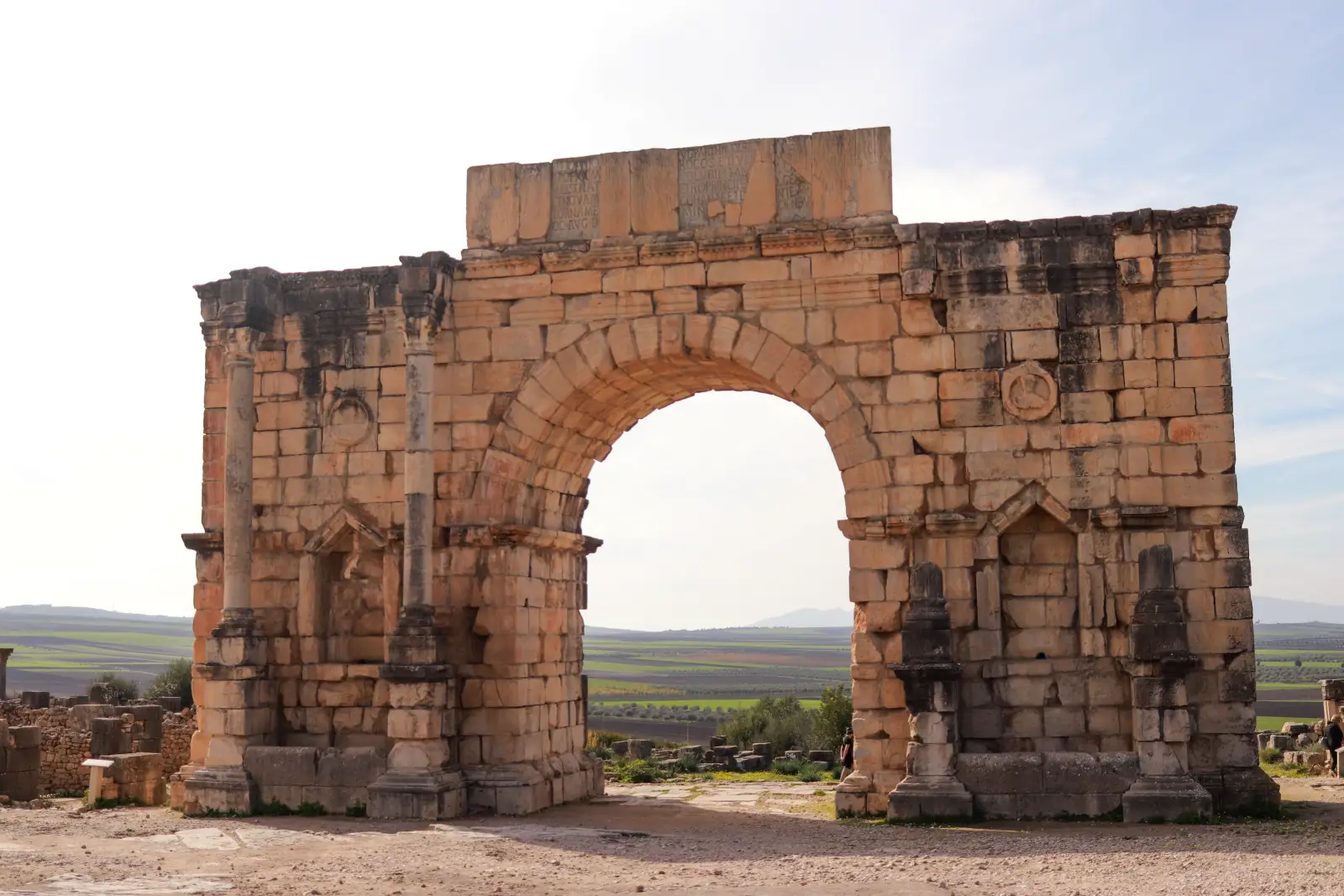
Add Volubilis or Chefchaouen to the Fes–Sahara–Marrakech crossing.
View TourFes → Todra Gorge → Marrakech
The classic one-way Sahara crossing from Fes to Marrakech via Merzouga, Todra and Ait Ben Haddou.
View Tour