What to pack for the Sahara is simpler than most lists online suggest: layers, a scarf, closed shoes — and permission to skip the costume.
What to pack for the Sahara: the essentials
The desert is a temperature machine. Mid-afternoon on the dunes can feel like a beach; 4 a.m. in camp in January can feel like a mountain. Pack layers you can add without unpacking a suitcase in the sand.
Closed shoes matter more than people think — sand, thorns, gorge paths. A scarf helps with wind. Sunscreen, lip balm, a small torch, any personal medication. Camps provide blankets; luxury camps provide more than that.
Season by season
From November to March, bring a warm fleece or light down jacket, a hat and socks for the night. From April to October, light long sleeves protect you from the sun better than a vest, and a refillable water bottle is worth more than any gadget. All year round, sunglasses make the camel ride far more comfortable.
What to leave in the riad
You do not need a full Berber costume. You do not need a tripod unless you are a photographer who already knows why. You do need a duffel or backpack that can move from a van to a camel rendezvous without drama. Hard roll-aboard suitcases are possible; they are not kind.
Most guests leave the big suitcase in the vehicle and take a small overnight bag into camp. Your driver keeps the rest safe until morning.
Camels, 4x4 and photos
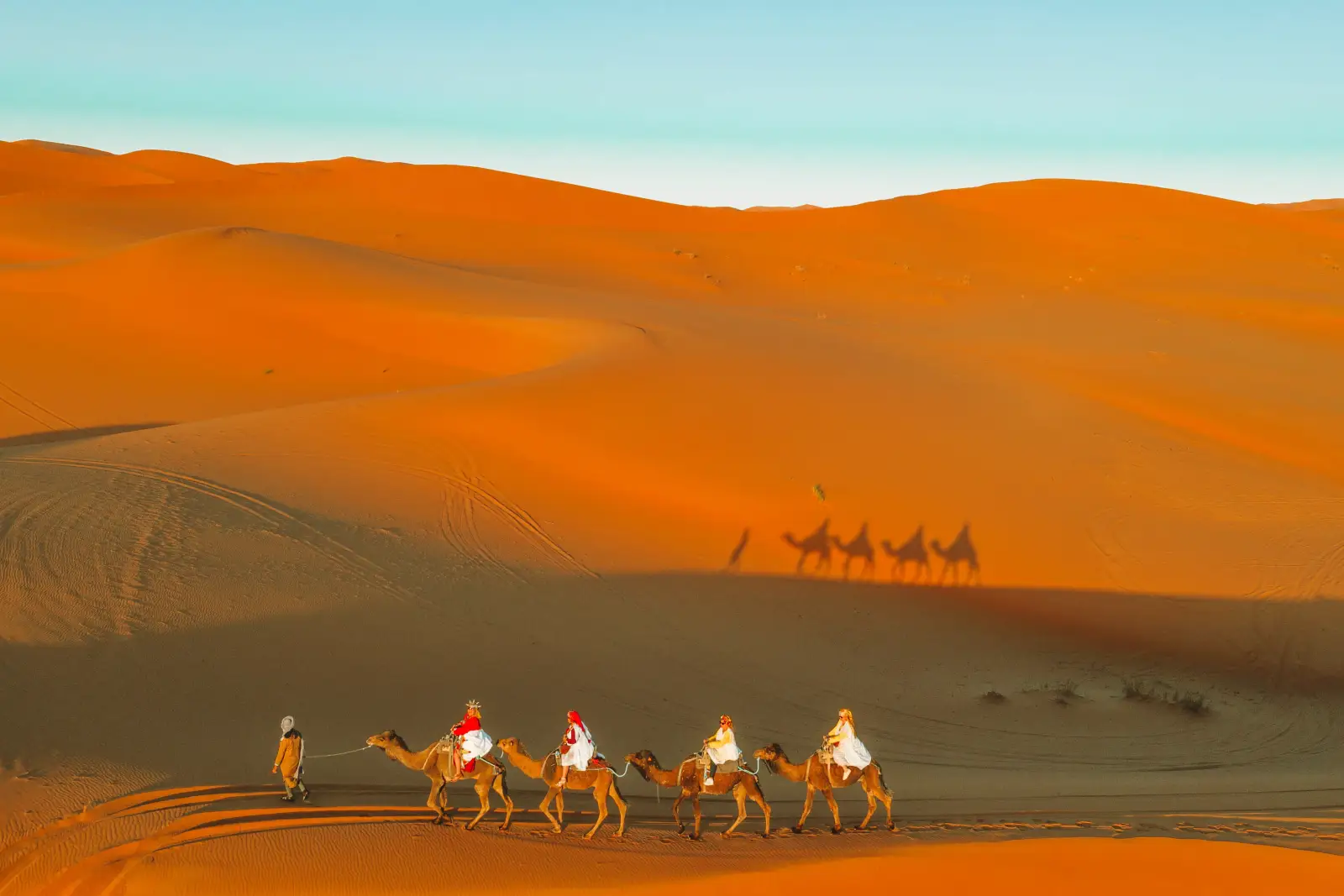
If you skip the camel, say so in advance so we plan the 4x4. If you have never ridden, the animals are led; you are not expected to command a caravan. Keep your phone in a zip pocket for the ride and take photos once you are on the dune crest.
Related reading: our 4-day Marrakech desert tour is the packing-list itinerary we have in mind — two climates, one bag.
Further reading from an official source: Visit Morocco notes on the Sahara and the Great South (Visit Morocco — the Moroccan desert).