Casablanca
Morocco’s economic capital and main airport — begin with Hassan II Mosque, then travel inland.
Highlights plus a second desert or Rif night — the more comfortable Casablanca week.
Journey overview
A private Moroccan journey from Casablanca
Eight days from Casablanca adds breathing room to the highlights tour. Fes gets its own day before the desert, and Marrakech is not only a last-night riad.
A favourite with couples flying long-haul who need the first day to be gentle.
Places on this tour: Casablanca · Fes · Merzouga · Dades Valley · Marrakech
This is a private tour with Moroccan Travel. See all tours from Casablanca, browse Morocco desert tours or every private Morocco tour.
Useful official background for places on this route: Visit Morocco guide to Errachidia, Midelt and Merzouga (Visit Morocco — Errachidia, Midelt and Merzouga).
Your route
Casablanca
 Fes
 Merzouga
 Dades Valley
 Marrakech
Tour highlights
Morocco’s economic capital and main airport — begin with Hassan II Mosque, then travel inland.
The spiritual and artisan capital, and a superb gateway to the Sahara via the Middle Atlas.
The village at the foot of Erg Chebbi, Morocco’s most sculptural dunes.
Roses, kasbahs and a road that folds through red rock.
Your 8-day itinerary
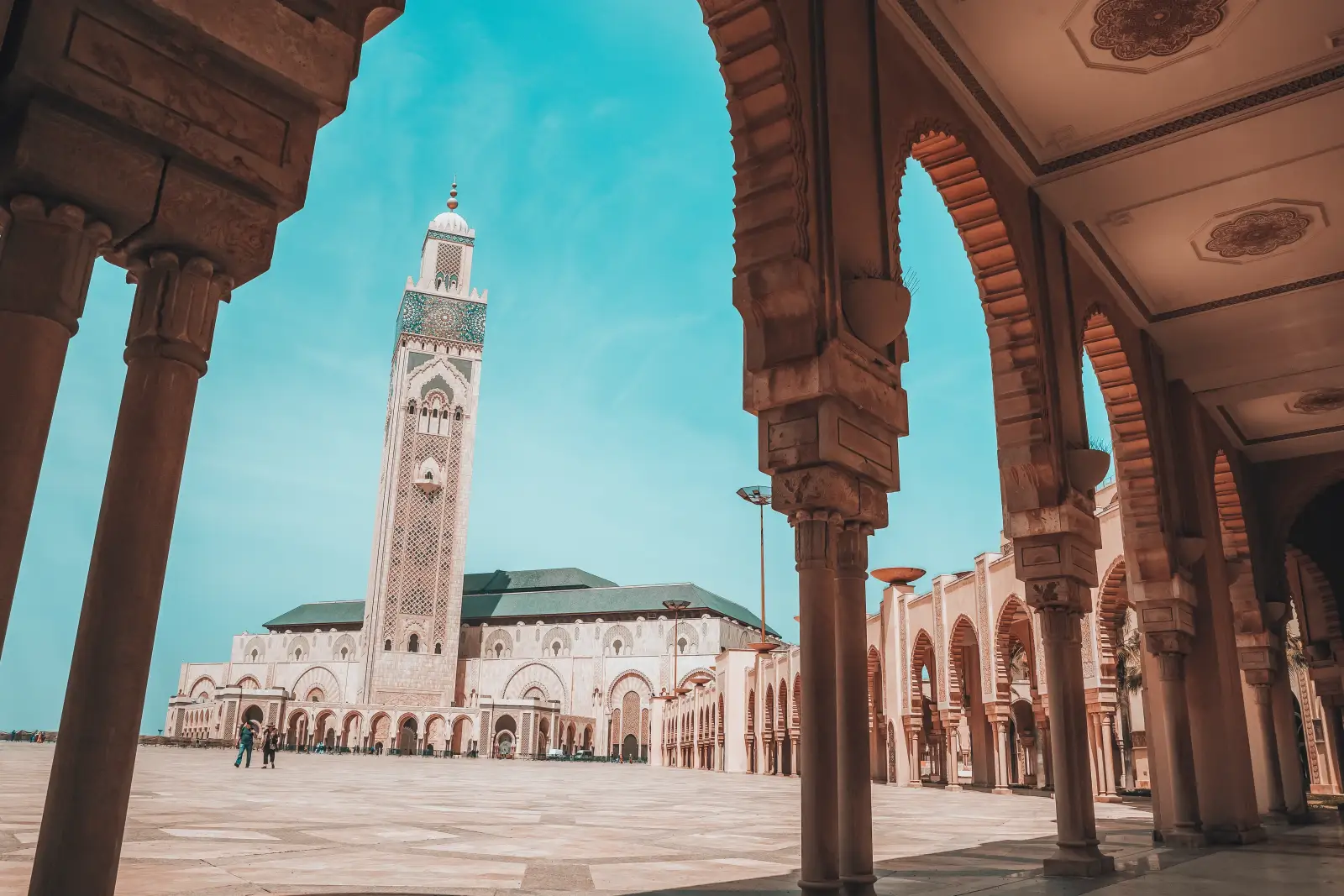
Casablanca is often just an airport, which is a pity if you have a morning. The Hassan II Mosque sits on a promontory above the Atlantic, one of the few Moroccan mosques open to non-Muslim visitors on a timed tour. The…
Casablanca is often just an airport, which is a pity if you have a morning. The Hassan II Mosque sits on a promontory above the Atlantic, one of the few Moroccan mosques open to non-Muslim visitors on a timed tour. The craftsmanship — zellige, cedar, marble — is a useful introduction to everything you will see later in Fes and Marrakech.
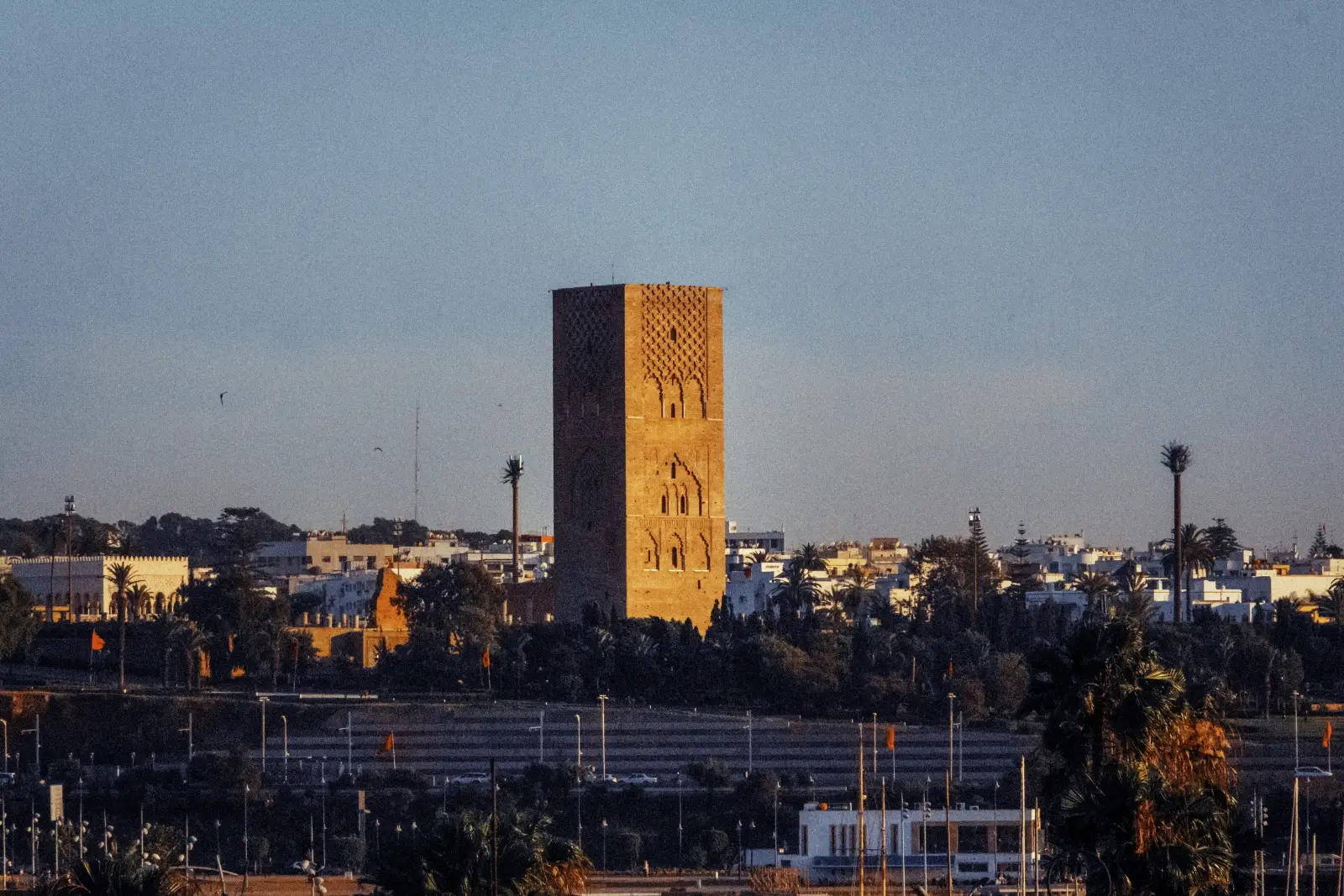
After lunch we drive north to Rabat, a calmer capital of gardens, wide avenues and a kasbah painted blue and white. The Kasbah of the Udayas overlooks the estuary; the Hassan Tower and Mausoleum of Mohammed V form the ceremonial heart of the city. Sunset from the Udayas platform, with fishing boats on the Bou Regreg, is a gentle first night in Morocco.
This day is designed around landing times. Late arrivals may see only the mosque exterior and continue to Rabat for dinner; early arrivals get the full walking circuit.
A classic imperial-city day. You leave Rabat after breakfast and reach Meknes, often quieter than Fes, to see Bab Mansour and the granaries of Moulay Ismail. The scale of the walls hints at a sultan who wanted a rival to…
A classic imperial-city day. You leave Rabat after breakfast and reach Meknes, often quieter than Fes, to see Bab Mansour and the granaries of Moulay Ismail. The scale of the walls hints at a sultan who wanted a rival to Versailles.
A short drive away, Volubilis is Morocco’s finest Roman site: mosaics of Bacchus and the labors of Hercules still in the floor, storks nesting on broken columns, wheat fields all around. A local site guide can be arranged. Nearby Moulay Idriss Zerhoun, the white holy town on two hills, is a respectful photo stop rather than a long visit.
You arrive in Fes in the afternoon, with time to rest before the medina’s intensity the next day. The layering of Roman, imperial and sacred Morocco in a single road day is why this route remains a favourite on tours that start in Casablanca.
Fes el-Bali is the largest car-free medieval city in the Arab world, and it rewards a local guide. After breakfast you enter through one of the great gates and move from the Andalusian quarter toward the Qarawiyyin…
Fes el-Bali is the largest car-free medieval city in the Arab world, and it rewards a local guide. After breakfast you enter through one of the great gates and move from the Andalusian quarter toward the Qarawiyyin mosque-university, the henna souk, and the Nejjarine woodworkers’ foundouk.
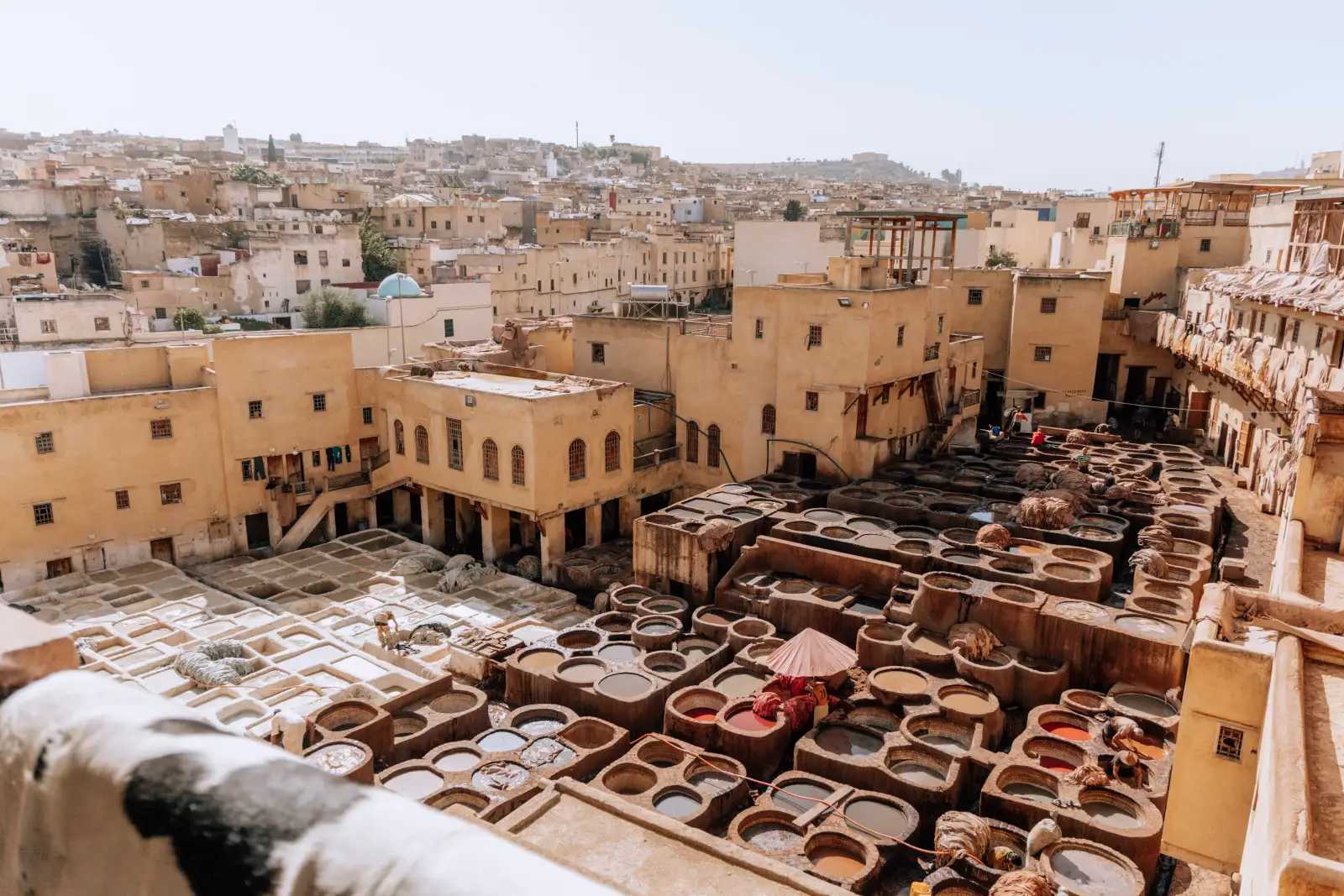
The Chouara tanneries are the most photographed scene in Fes: stone vats of white, brown and poppy-red dye, viewed from a terrace above. We time the visit so you are not rushed, and we skip aggressive shopping circuits unless you ask to see leather or carpet workshops. Lunch is in a restored palace or a simple medina restaurant, depending on your style.
Afternoon options include the Bou Inania madrasa, the pottery kilns of Fes Jdid, or simply getting lost — with your guide — in lanes that smell of cedar, cumin and wet wool. You return to the riad before dusk. Fes is intense; a private tour means you can step into a courtyard whenever the medina feels like too much.
Pickup at your Fes riad after breakfast. You leave the medina behind and climb into the Middle Atlas, a cooler world of cedar and oak. Ifrane, built like a small alpine town, is a coffee stop; Azrou’s forest often offers a…
Pickup at your Fes riad after breakfast. You leave the medina behind and climb into the Middle Atlas, a cooler world of cedar and oak. Ifrane, built like a small alpine town, is a coffee stop; Azrou’s forest often offers a glimpse of macaques. The air is noticeably fresher than the plains.
South of Midelt the landscape dries. Apple trees give way to steppe, then to the first views of the Ziz gorges — a break in the plateau where the river has cut a deep green trench of palms. We pause at a belvedere before continuing through Errachidia and Erfoud, towns that live off dates, fossils and the desert road.
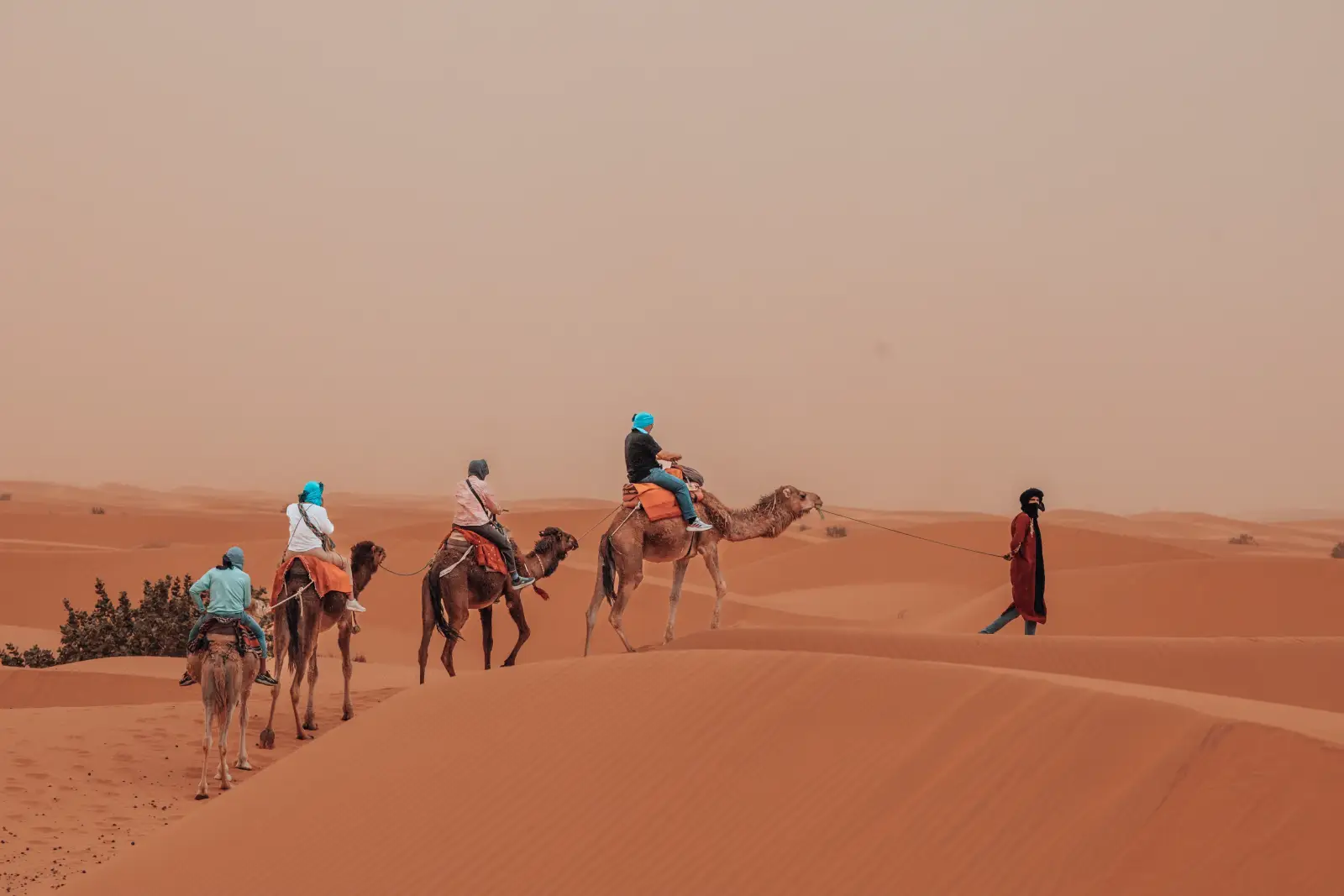
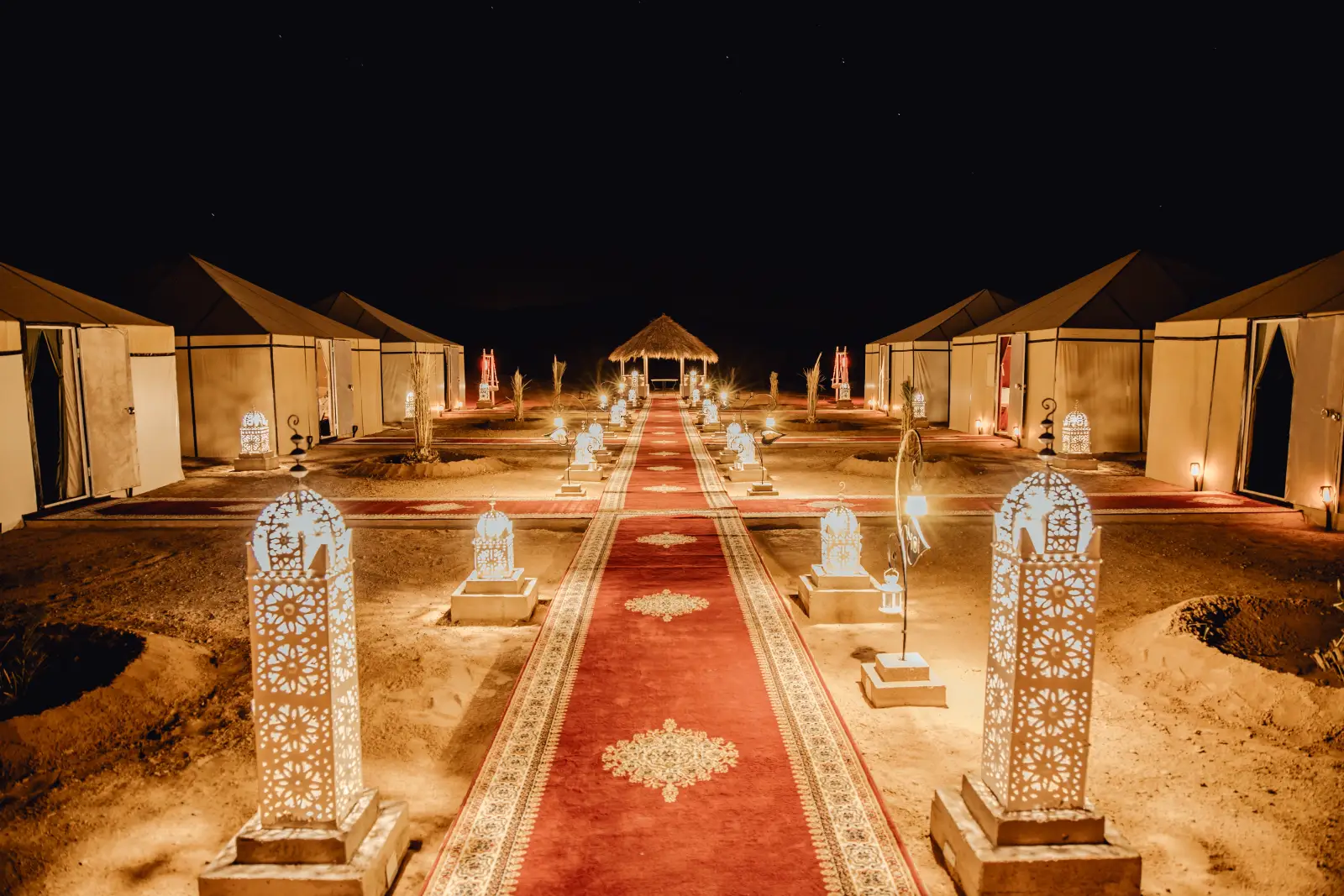
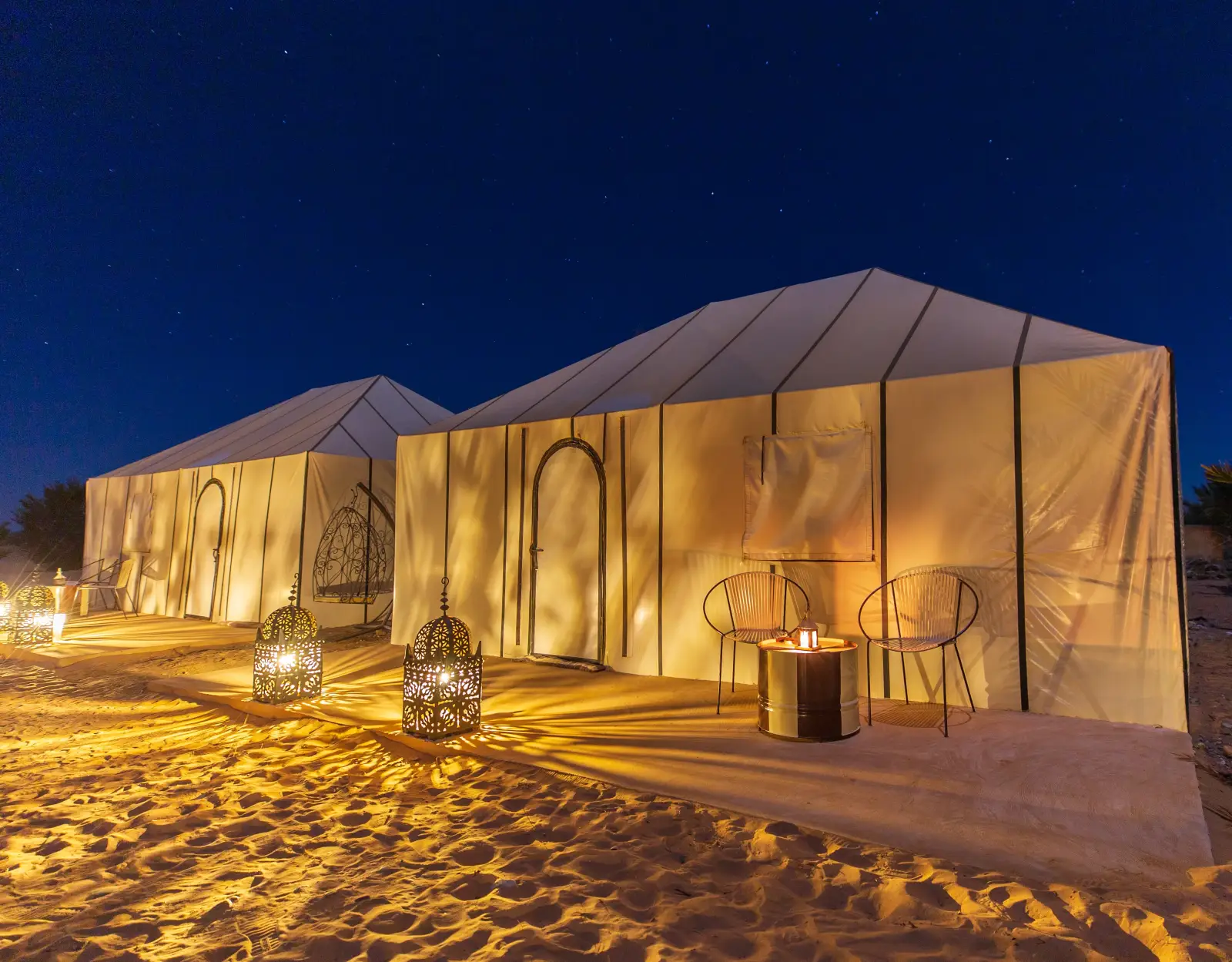
Erg Chebbi comes into view in the late afternoon. After a short rest in Merzouga, you mount camels and ride into the dunes for sunset. Dinner, Berber music and a night under an enormous sky follow at camp. If you would rather skip the camel, a 4x4 can take the same route into the sand.
After sunrise on the dunes you return by camel or 4x4 to Merzouga, collect the vehicle, and begin the westward road. Rissani’s market town is a last desert-edge stop for water and dates. The hamada looks emptier in morning light than it did on the way in.
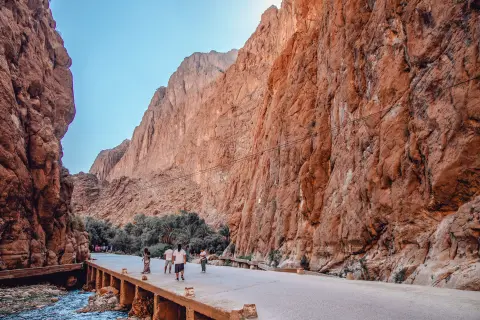
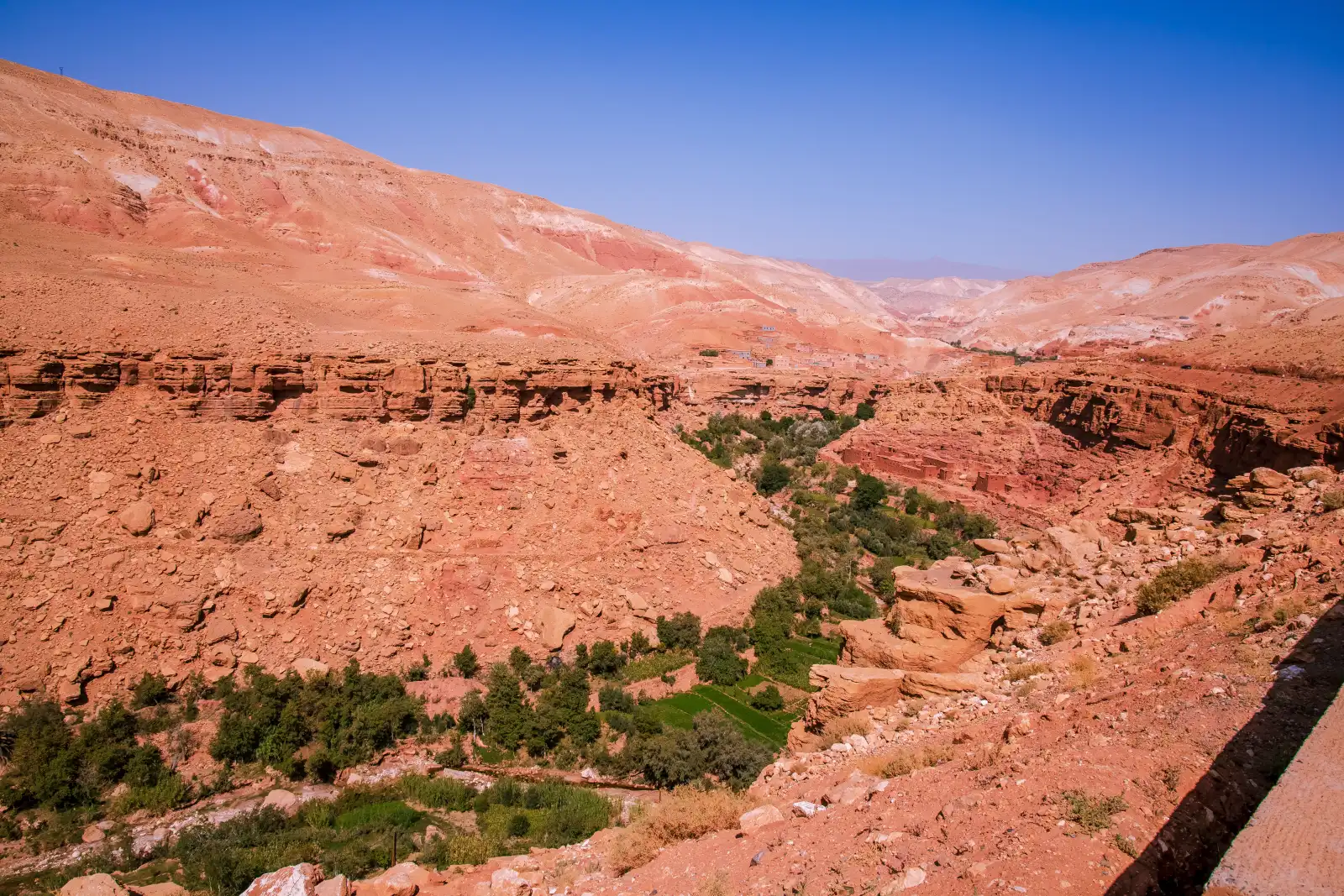
Todra Gorge is the walking pause of the day: limestone walls, a cold stream, tea if you want it. Then the Dades Valley opens — kasbahs, roses in season, and the road of a thousand photographs. Skoura’s palmeraie appears before Ouarzazate, a green surprise after so much stone.
You reach Ouarzazate in the late afternoon. Taourirt Kasbah is optional if energy remains; most guests prefer a shower and a quiet dinner. Tomorrow is Ait Ben Haddou and, on many itineraries, the Atlas toward Marrakech.
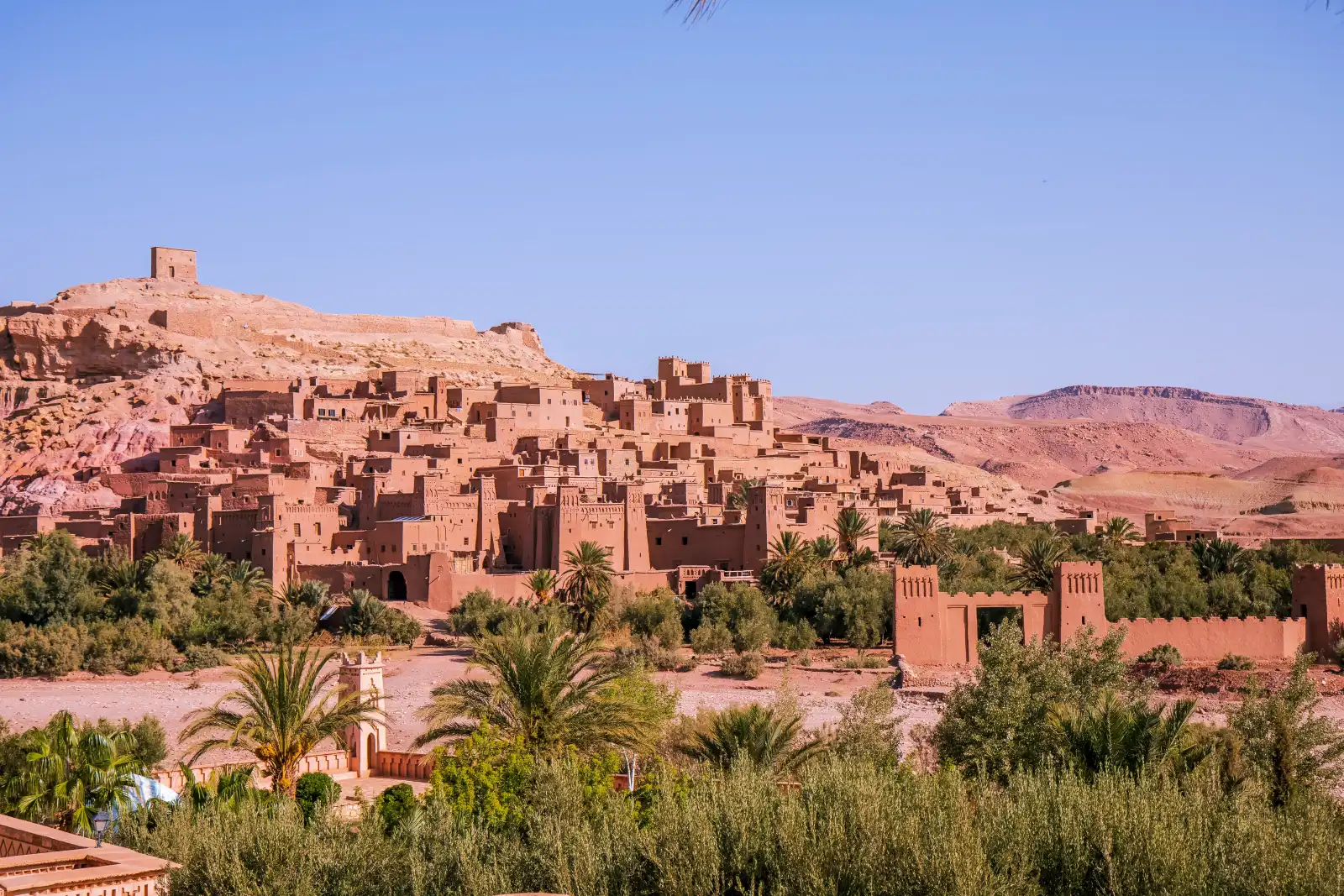
A morning visit to Ait Ben Haddou while many groups are still on the pass. You walk the ksar, climb toward the granary, and take the view over the Ounila Valley that has sold a thousand film stills — and still works in person.
Lunch is in the village or just below the pass. Then Tizi n’Tichka: switchbacks, walnut groves as you descend, and the first red walls of Marrakech in the late afternoon. We drop you at your riad and leave the evening free. Jemaa el-Fna is optional; a quiet courtyard is equally correct after the desert.
This is the classic final act of a southbound tour. If your flight is the same night, say so — we will time the pass and skip a long ksar walk.
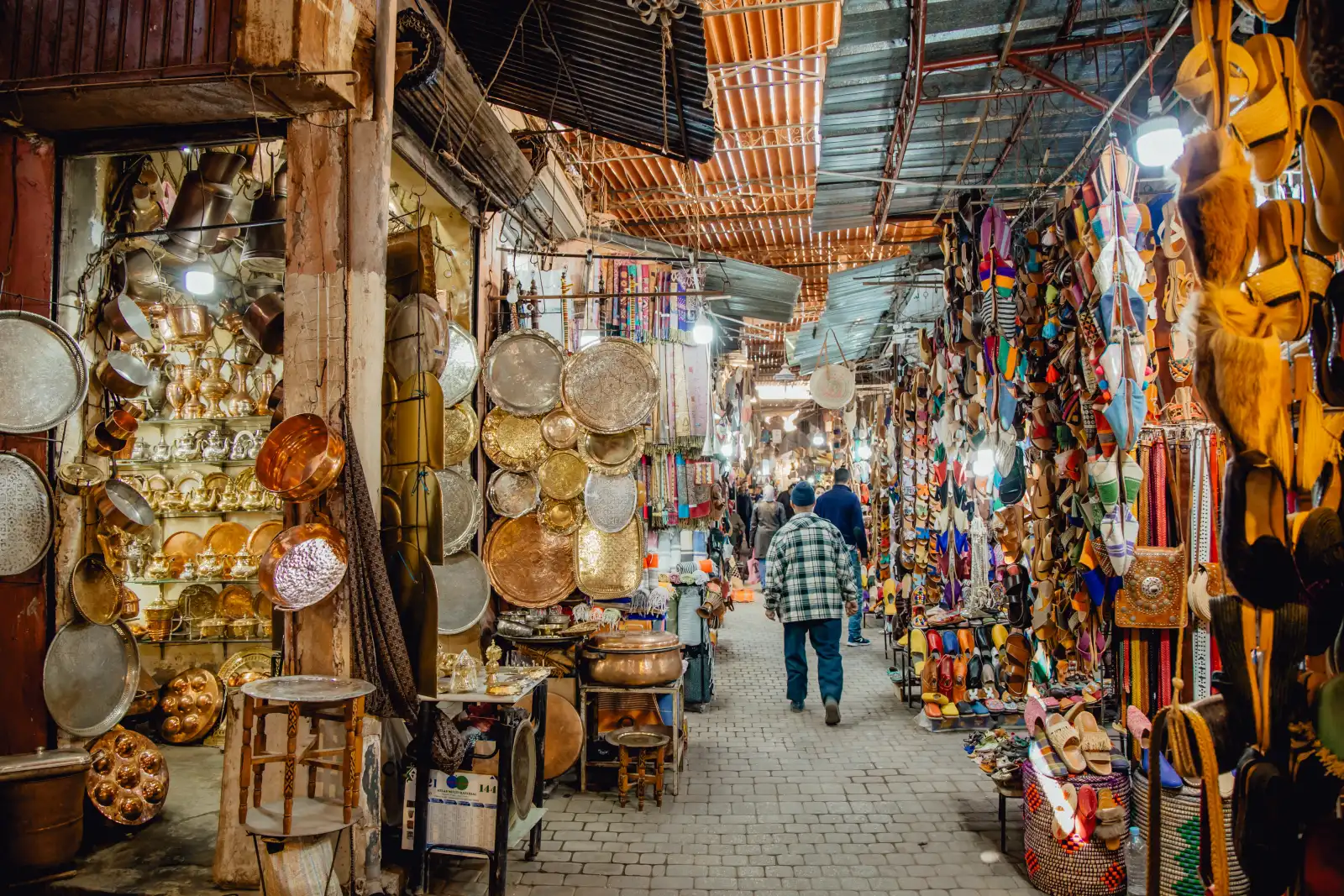
Marrakech is best taken slowly after a desert road. This day can be guided or self-guided with your driver available for gardens and the palmeraie. Typical highlights include the Koutoubia minaret, the Bahia Palace, and a wander through the souks of Semmarine and Attarine without a shopping agenda unless you want one.
In the afternoon, Jardin Majorelle and the Yves Saint Laurent Museum, or the quieter secret gardens, offer shade and a different register of the city. Some guests prefer a hammam; others sit on a rooftop and watch storks on the ramparts.
At sunset Jemaa el-Fna comes alive — orange juice stalls, drums, steam from snail soup. We do not treat it as a show to be consumed in twenty minutes. Stay for the call to prayer from the Koutoubia, then eat where you like: a famous palace restaurant or a grilled-lamb stall. Your riad is never far.
Agafay is not the Sahara — it is a rolling stone desert an hour from Marrakech, with Atlas views and a genuine sunset. That honesty is important. What it offers is time: a late-afternoon camel ride, photographs on bare hills, and dinner in a tented camp without committing to a two-day road trip.
Quad bikes and, at some camps, stargazing are optional. We pick you up from your riad in the afternoon and return after dinner, or we can arrange an overnight if you want the night sky without Erg Chebbi. Many guests do Agafay at the start of a trip and Merzouga later; they are complementary, not duplicates.
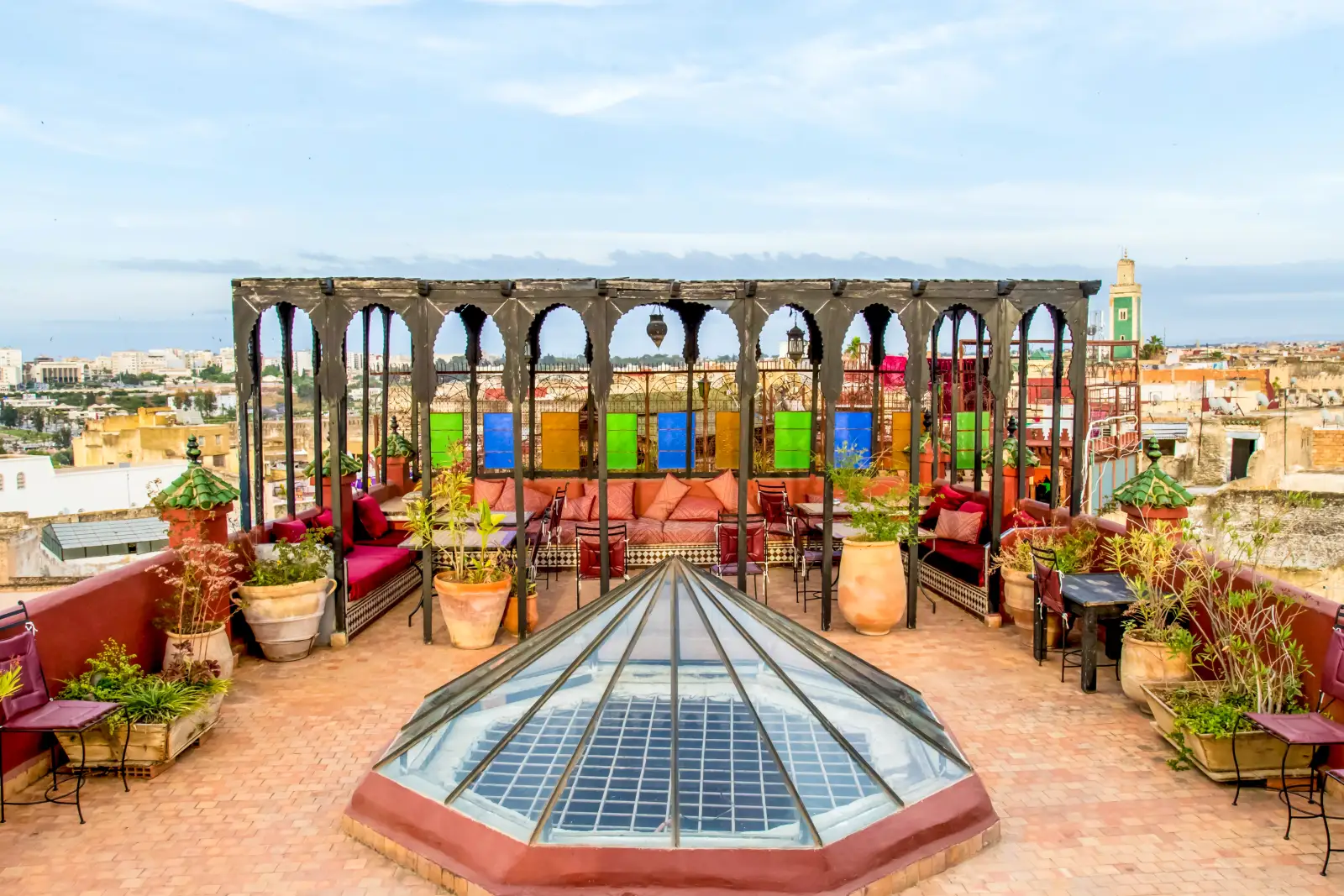
A carefully selected mix of authentic stays — standard, comfort or luxury.
Some days involve longer drives due to the distances between regions — always broken with scenic stops.
The desert experience includes a camel trek, with a 4x4 option available if you prefer.
Everything can be adapted to your preferences. We work with family-run stays and local guides.
Yes. You travel in a private air-conditioned vehicle with a professional driver. Dates, pace and stops are yours — we do not combine you with other bookings.
Yes. Nights, hotel category, camel versus 4x4, extra cities and slower driving days can all be rewritten before you book. This outline is a starting point.
No. The usual sunset ride into Erg Chebbi lasts about 45–90 minutes at walking pace. You may take a 4x4 to camp instead — say so when you inquire.
Layers, closed shoes, a scarf for wind, sunscreen and a small torch. Camps provide blankets. Duffels move more kindly than hard suitcases. Nights can be cold even after hot afternoons.
Some days are scenic transfers with stops; others stay in one medina. We will not hide hours. If you want fewer road days we cut a city rather than pretending Morocco is small.
Tell us your plans and we’ll create a personalised itinerary for you.
Casablanca → Merzouga → Marrakech
The efficient grand snapshot: mosque, Fes, Sahara night, kasbahs and Marrakech.
View TourCasablanca → Fes → Marrakech
Casablanca to Marrakech with Chefchaouen, Fes and the Sahara — the complete highlights map.
View TourCasablanca → Merzouga → Marrakech
A classic ten-day private Morocco from Casablanca airport to Marrakech.
View Tour