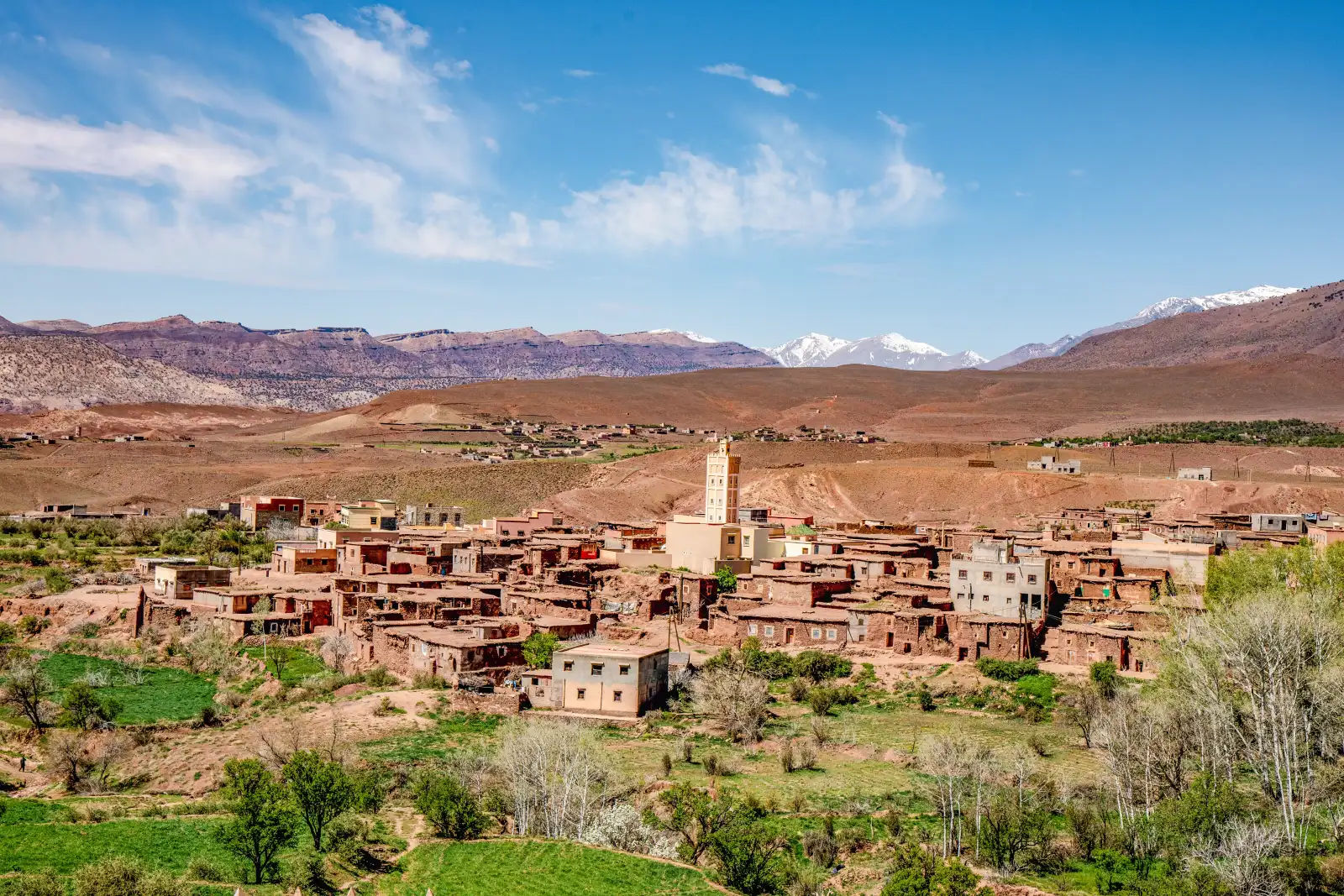
Atlas Mountains
High Atlas villages, Tizi n’Tichka, Toubkal foothills and the wall between coast and desert.
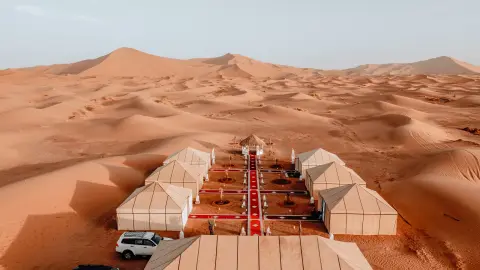
A generous Sahara loop with a High Atlas or Draa extra night and two dawns in dune country.
Journey overview
A private Moroccan journey from Marrakech
Five days lets the south of Morocco breathe. We often begin with a night in the High Atlas so the desert road is not your first Moroccan morning, then move through Skoura and Dades before two nights around Merzouga.
You will have time for a gorge walk that is not squeezed between checkpoints, a village tea, and a desert day that includes more than a single sunset selfie. Return to Marrakech on day five.
Ideal for travelers who value photography, walking and conversation over ticking a list. Camp and riad categories are chosen with you — standard, comfort or luxury.
Places on this tour: Atlas Mountains · Ait Ben Haddou · Ouarzazate · Dades Valley · Todra Gorge · Merzouga
This is a private tour with Moroccan Travel. See all tours from Marrakech, browse Morocco desert tours or every private Morocco tour.
Useful official background for places on this route: Visit Morocco guide to Errachidia, Midelt and Merzouga (Visit Morocco — Errachidia, Midelt and Merzouga).
Your route
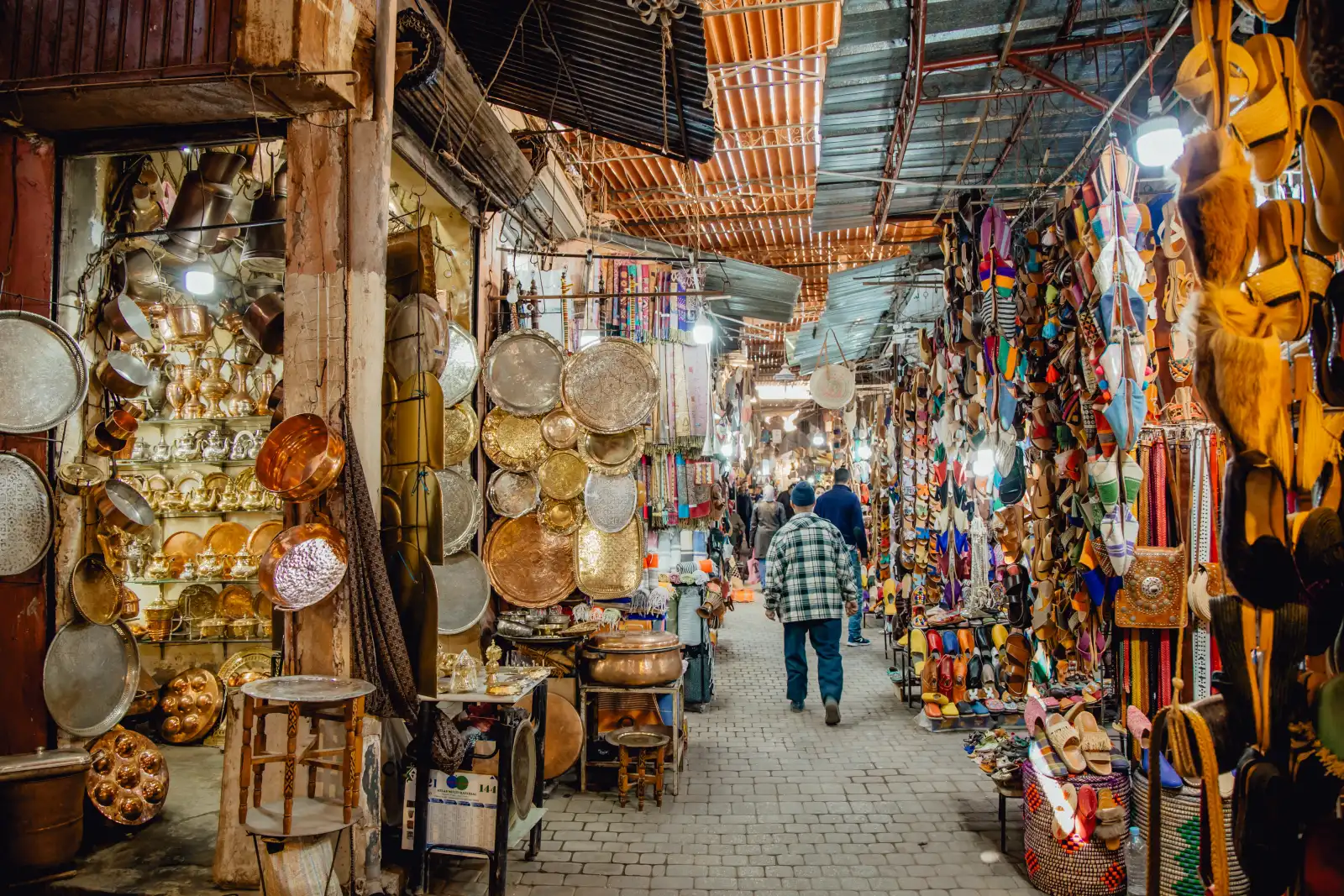 Marrakech
High Atlas
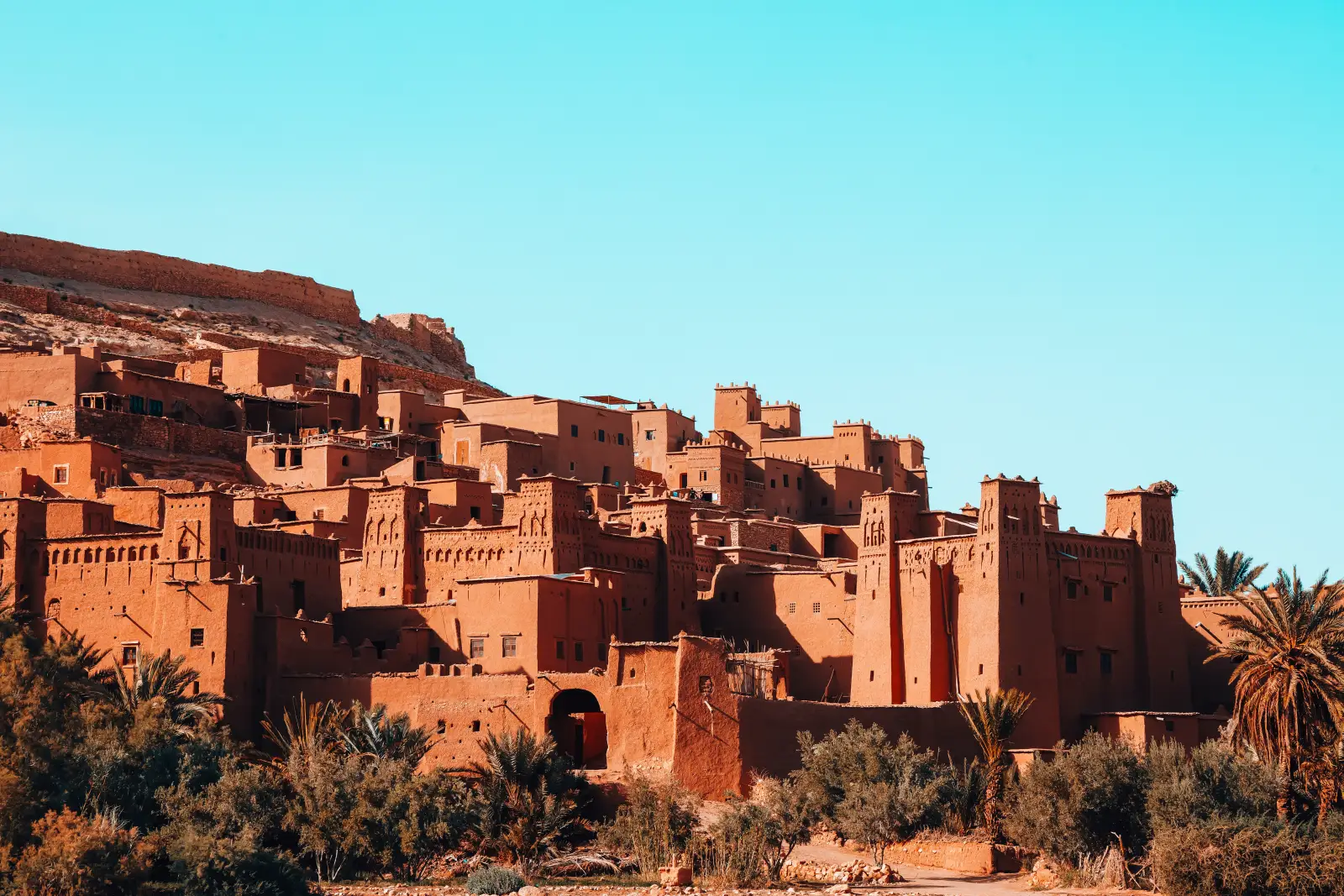 Ait Ben Haddou
 Ouarzazate
 Dades Valley
 Todra Gorge
Marrakech
Tour highlights
High Atlas villages, Tizi n’Tichka, Toubkal foothills and the wall between coast and desert.
UNESCO ksar, caravan architecture, and the postcard of southern Morocco.
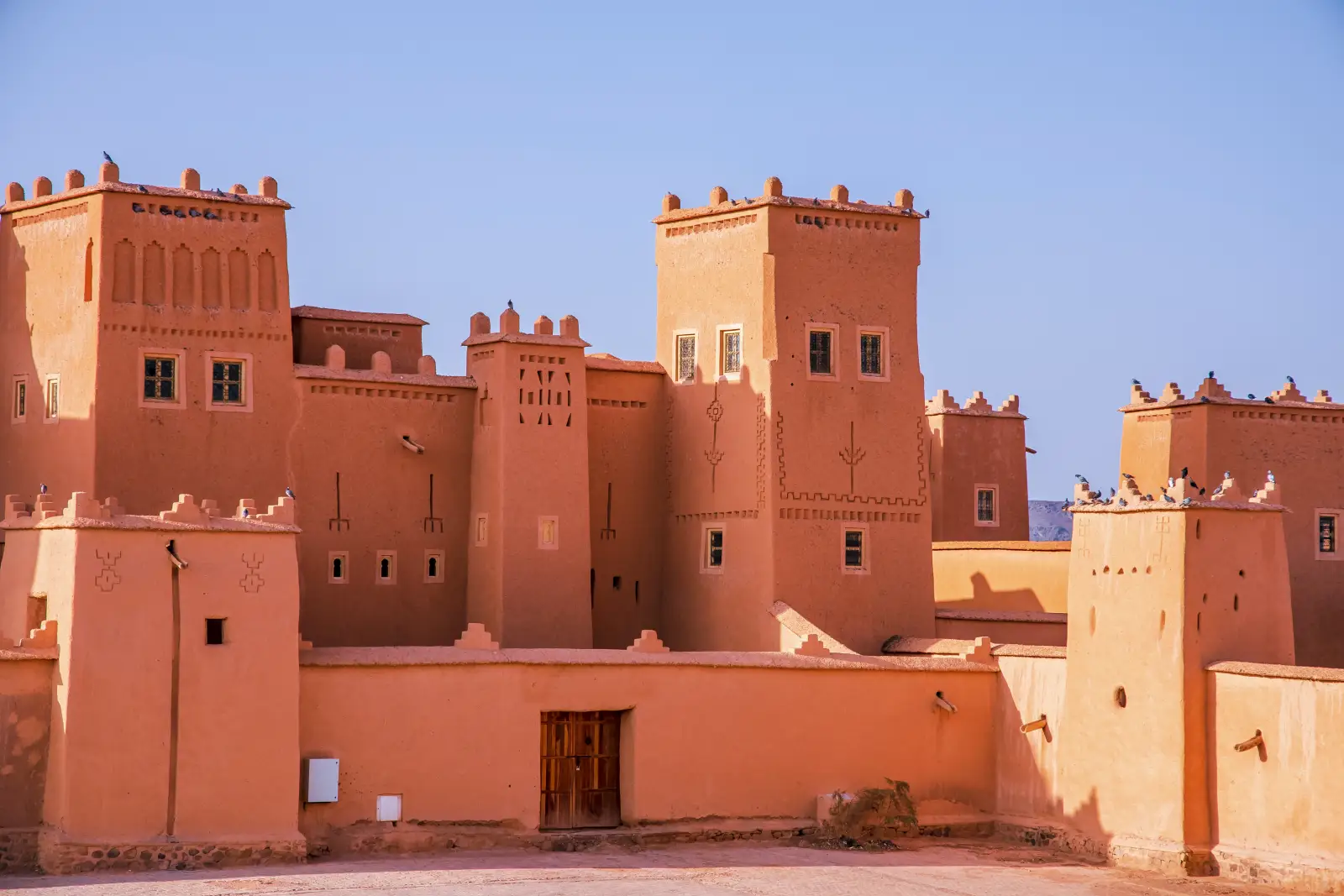
Door of the desert: kasbahs, film studios and the start of the kasbah road.
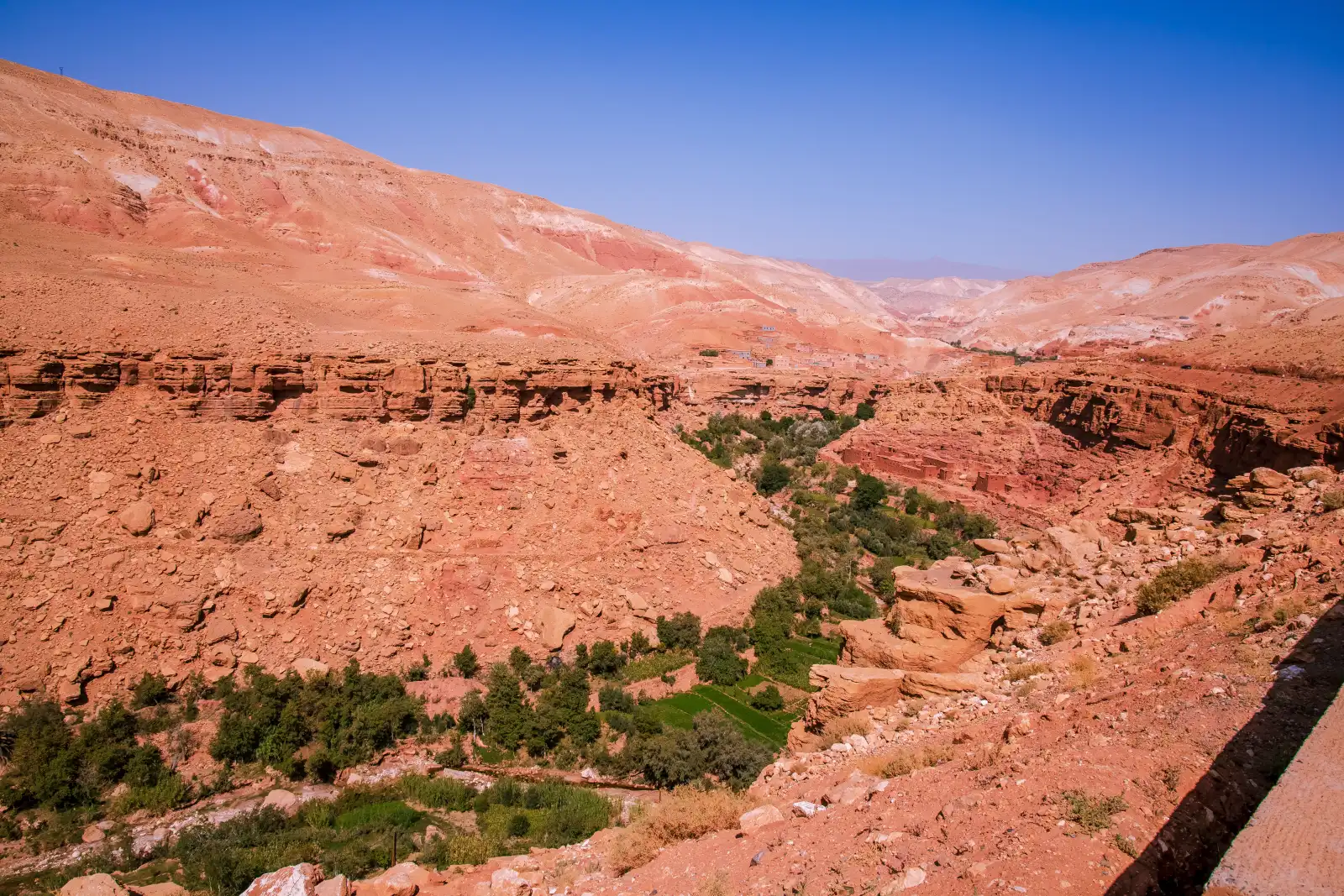
Roses, kasbahs and a road that folds through red rock.
Your 5-day itinerary
Leave Marrakech after a leisurely morning and reach Imlil for lunch. An easy walk to a neighbouring village, dinner by the fire in winter, and a night at 1,700 meters. The silence after the medina is the point.
Leave Marrakech after a leisurely morning and reach Imlil for lunch. An easy walk to a neighbouring village, dinner by the fire in winter, and a night at 1,700 meters. The silence after the medina is the point.
The next day you can walk further toward Toubkal base or continue over the Tizi n’Tichka toward the desert. This overnight is how we turn a standard desert tour into something with mountain character.
A slower southern day, which is the point. Morning among the palms and kasbahs of Skoura, including a walk to Kasbah Amridil if you like historic houses — mud towers, storks, irrigation channels you can hear. The palmeraie is…
A slower southern day, which is the point. Morning among the palms and kasbahs of Skoura, including a walk to Kasbah Amridil if you like historic houses — mud towers, storks, irrigation channels you can hear. The palmeraie is agricultural, not decorative.
Then the rose country of El Kelaa M’Gouna, where the harvest in spring scents the whole valley, and the sculpted rocks of the Dades gorges. The road folds through red cliffs that look arranged. We stop where the light is good, not where a flag is planted.
Overnight in the valley with time to walk above the river before dinner. This pacing is used on 4- and 5-day desert tours so Todra and Merzouga do not collapse into a single exhausted afternoon.
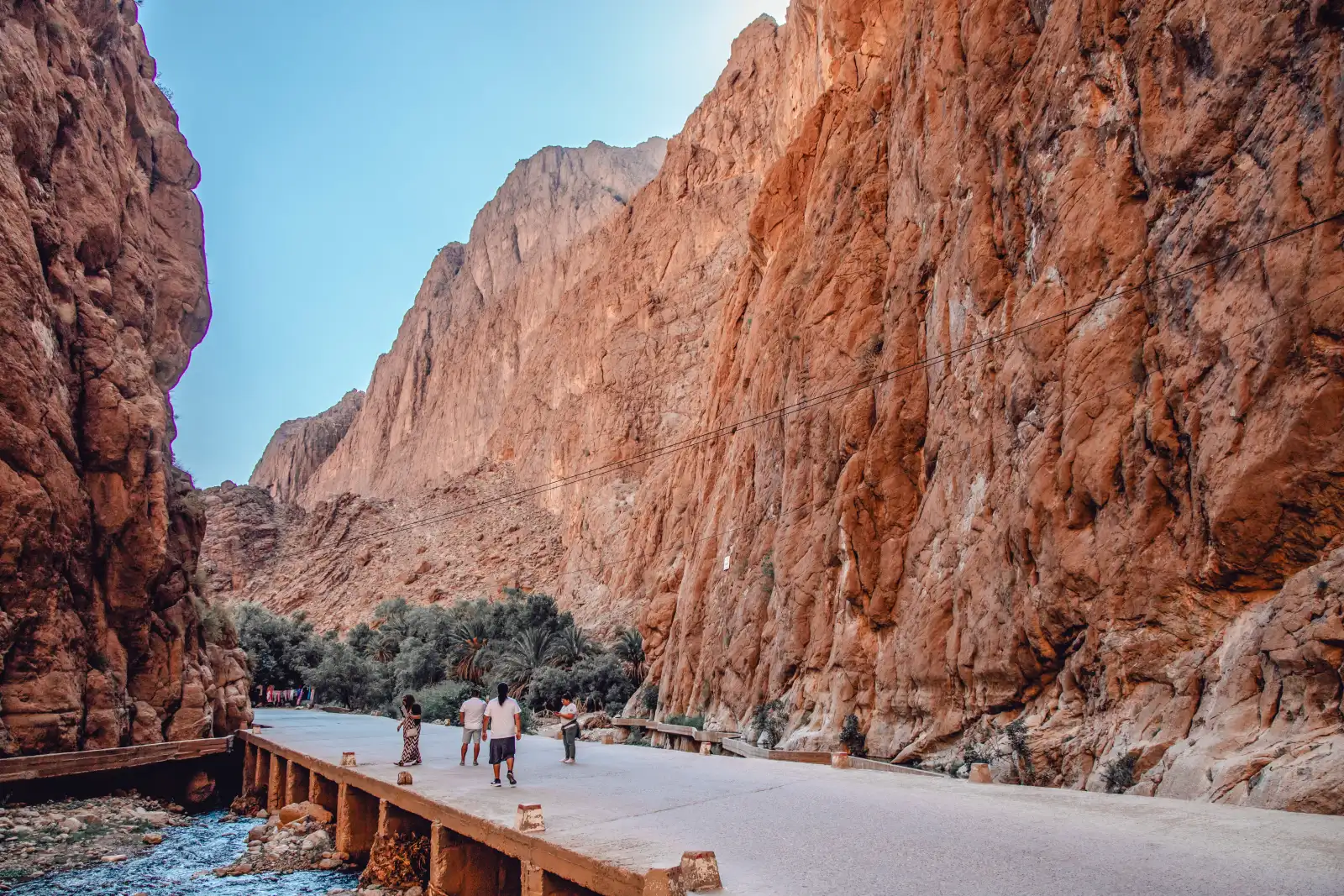
Morning light in the Dades is worth an early walk. After breakfast you follow the valley to Tinghir and the Todra Gorge, where 300-meter limestone walls close in above a clear stream. There is time to stroll the canyon floor…
Morning light in the Dades is worth an early walk. After breakfast you follow the valley to Tinghir and the Todra Gorge, where 300-meter limestone walls close in above a clear stream. There is time to stroll the canyon floor, watch climbers on the faces, and have tea at a simple café at the narrowest point.
East of Tinghir the road crosses open hamada toward Tinejdad, Erfoud and Rissani, the old caravan market at the edge of the Tafilalet palmeraie. Rissani still feels like a frontier town: donkey carts, spice stalls and the last petrol station before the dunes. From here the Erg Chebbi sand sea rises suddenly — a 150-meter wall of orange ridges that looks almost unreal after hours of stone desert.
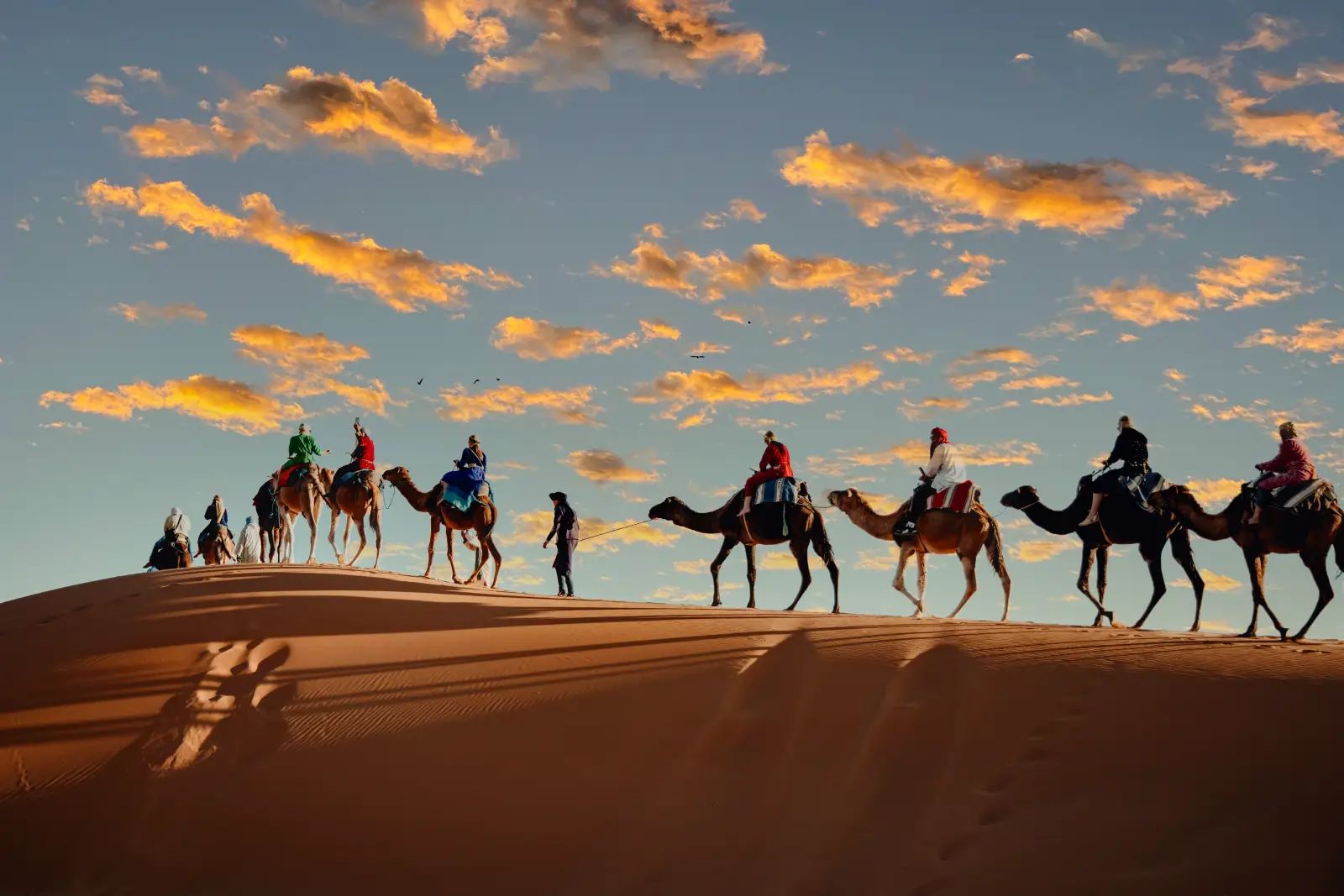
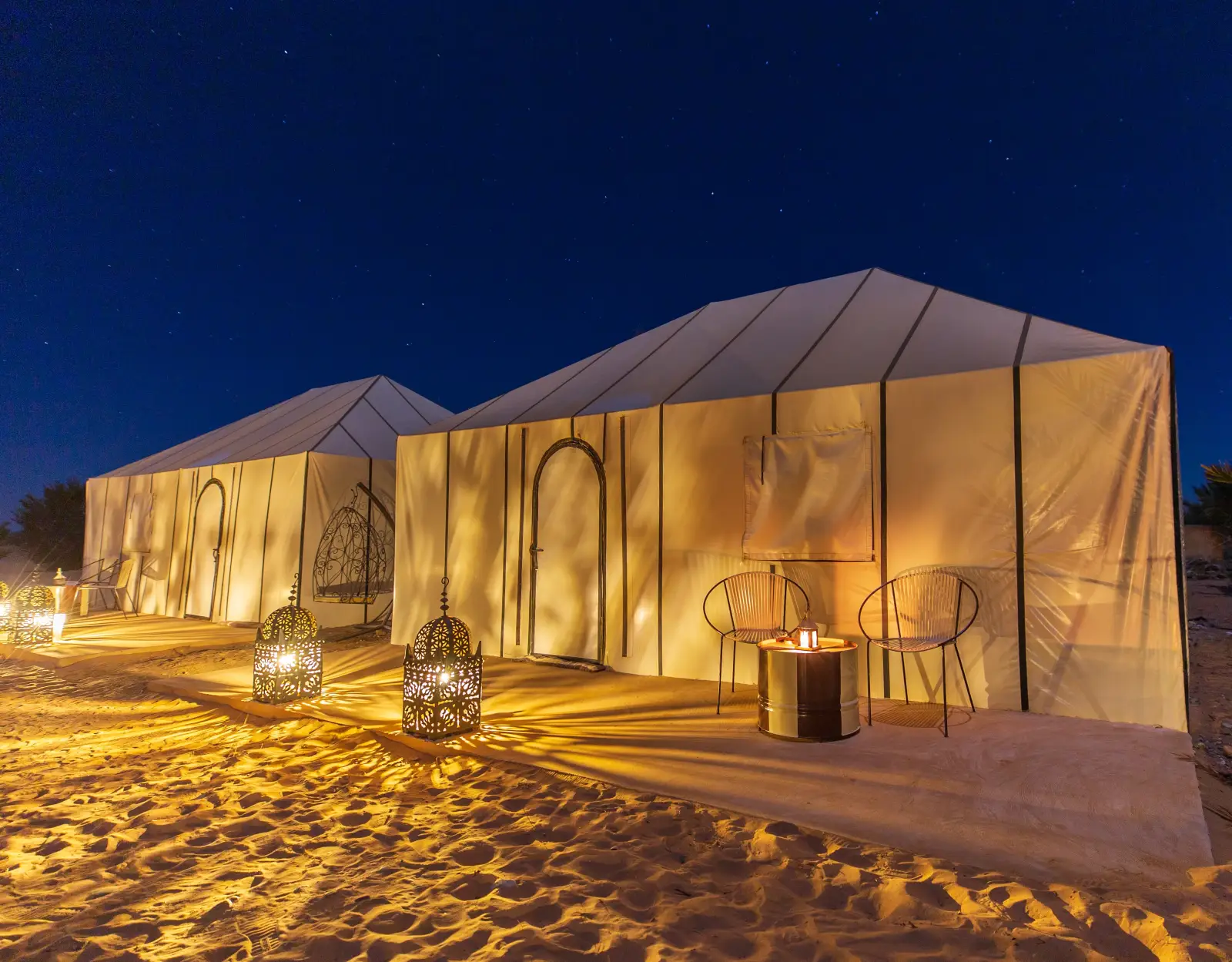
In Merzouga you leave the vehicle. Camels (or a 4x4 if you prefer) take you into the dunes for sunset. The camp is waiting with rugs, lanterns and a shared dinner of tagine and bread baked in sand. After music around the fire, the silence of the Sahara takes over. Sleep is in Berber tents; luxury camps add private bathrooms and proper beds if you have requested an upgrade.
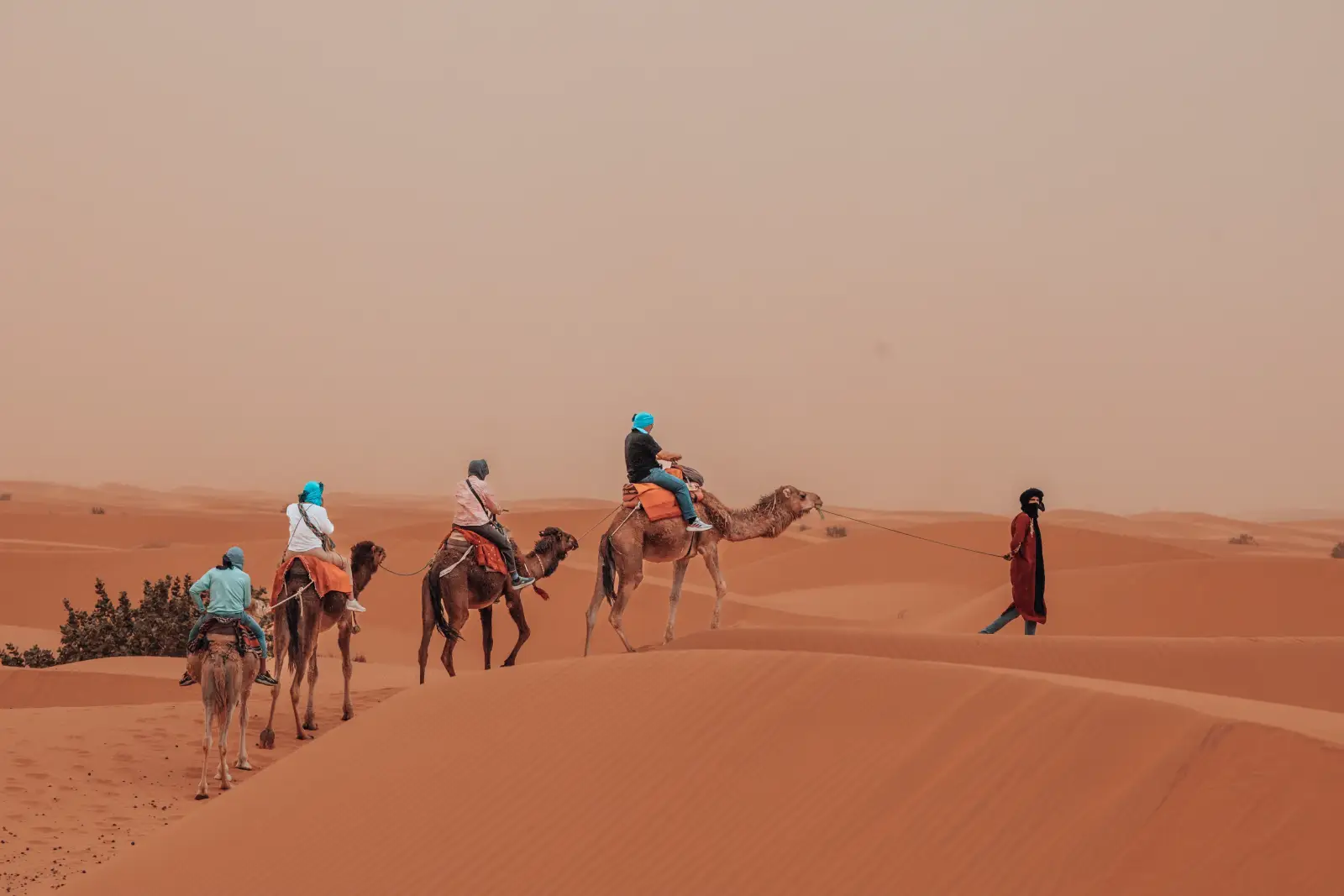
A full day among the dunes changes the trip from a transit into a stay. After sunrise you can sandboard, walk a ridge in silence, or return to bed for a late breakfast. The heat of midday is best spent in shade — at camp, or at a…
A full day among the dunes changes the trip from a transit into a stay. After sunrise you can sandboard, walk a ridge in silence, or return to bed for a late breakfast. The heat of midday is best spent in shade — at camp, or at a kasbah hotel with a pool on the edge of the erg.
In the afternoon a 4x4 circuit can take you to nomad tents, the village of Khamlia known for Gnawa music, seasonal lakes if it has rained, and fossil workshops in the hamada. These visits are arranged at a human pace, with tea rather than a checklist.
Sunset is again in the dunes, perhaps from a different ridge than yesterday. A second night in camp lets the desert settle in: you start to recognize the shape of the nearest dune, and the night sky feels less like a spectacle and more like a place you are sleeping inside.
If you wish, your camp team wakes you for sunrise on the dunes — the sand turns from violet to gold in about twenty minutes. After breakfast you return by camel or 4x4 to Merzouga, meet your driver, and begin the long, beautiful run west.
The return typically follows Alnif, Tazzarine and the Jebel Saghro foothills into the Draa Valley, a different line from yesterday so you are not retracing the same views. Palm groves thicken around N’Kob and Agdz. Lunch is in a roadside restaurant with a view of kasbahs. Then the road climbs again toward Ouarzazate and the Tizi n'Tichka pass.
Arrival in Marrakech is usually in the early evening. We drop you at your riad in the medina or at the airport if you have a night flight. It is a full day of driving, broken by scenery and stops; travelers who prefer a gentler pace often add a night in Dades or Ouarzazate on a longer itinerary.
A carefully selected mix of authentic stays — standard, comfort or luxury.
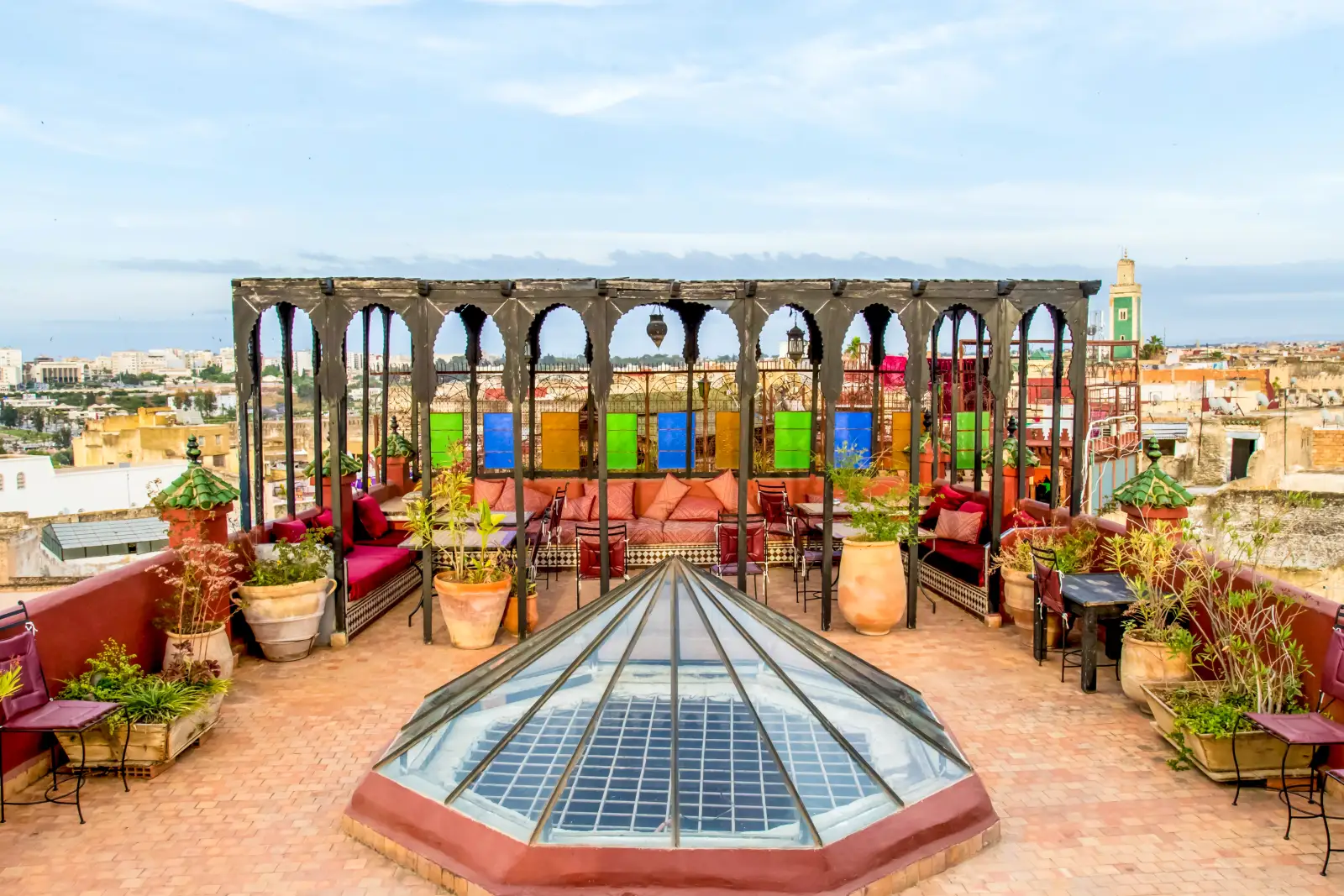
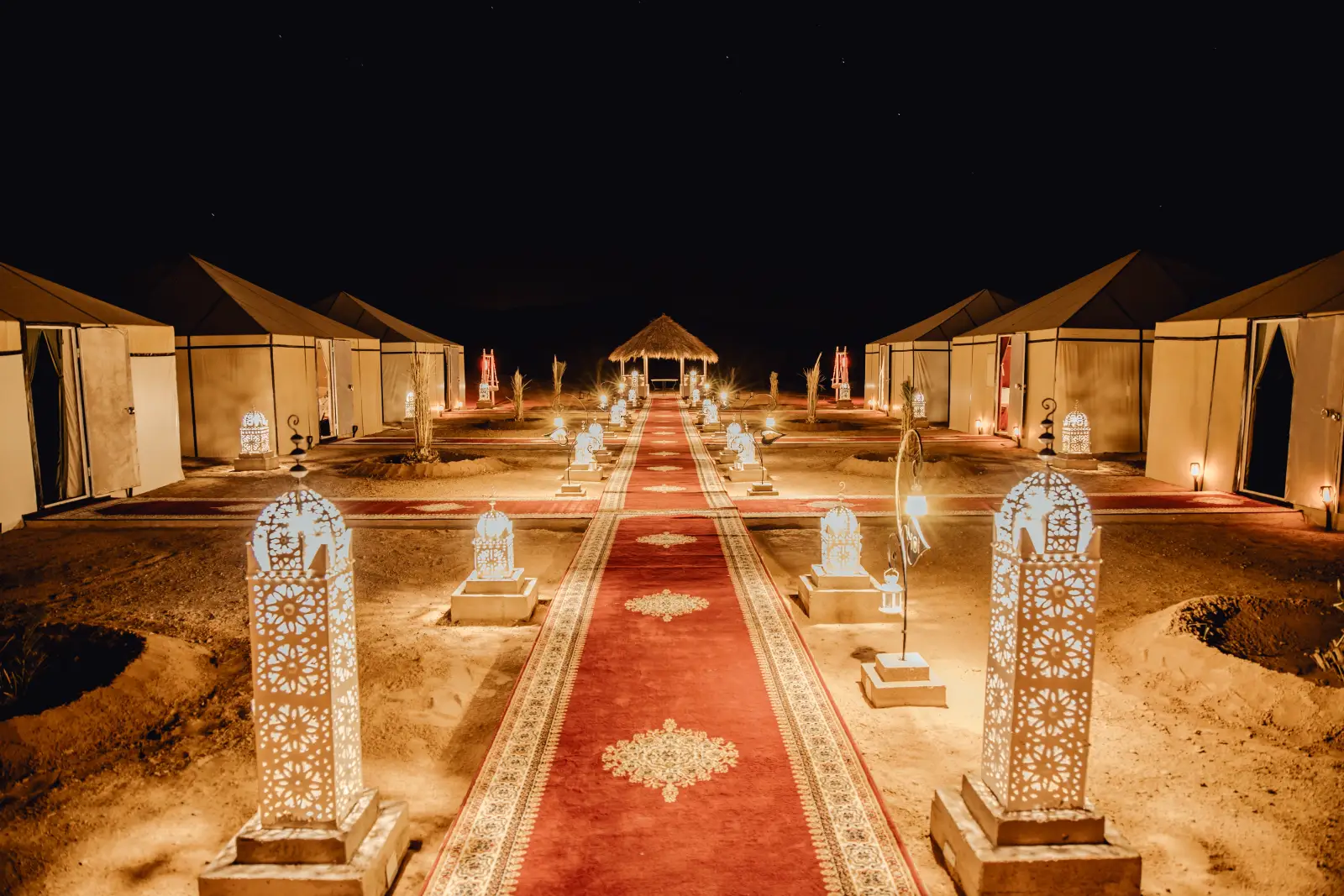
Some days involve longer drives due to the distances between regions — always broken with scenic stops.
The desert experience includes a camel trek, with a 4x4 option available if you prefer.
Everything can be adapted to your preferences. We work with family-run stays and local guides.
Yes. You travel in a private air-conditioned vehicle with a professional driver. Dates, pace and stops are yours — we do not combine you with other bookings.
Yes. Nights, hotel category, camel versus 4x4, extra cities and slower driving days can all be rewritten before you book. This outline is a starting point.
No. The usual sunset ride into Erg Chebbi lasts about 45–90 minutes at walking pace. You may take a 4x4 to camp instead — say so when you inquire.
Layers, closed shoes, a scarf for wind, sunscreen and a small torch. Camps provide blankets. Duffels move more kindly than hard suitcases. Nights can be cold even after hot afternoons.
Village paths are optional and paced to the group. This is not a Toubkal summit day unless you ask for a trekking outline. Tell us about knees and we will keep the walk on gentler tracks.
Tell us your plans and we’ll create a personalised itinerary for you.
Marrakech → Skoura → Merzouga
A better-paced Merzouga journey with extra time in the gorges and a fuller desert morning.
View TourMarrakech → Dades Valley → Merzouga
The classic private Sahara circuit: Atlas pass, Ait Ben Haddou, Dades, Todra and a night among the Erg Chebbi dunes.
View TourMarrakech → Dades Valley → Fes
The essential south-to-north crossing: mountains, kasbahs, Sahara and the road to Fes with civilized pacing.
View Tour